My
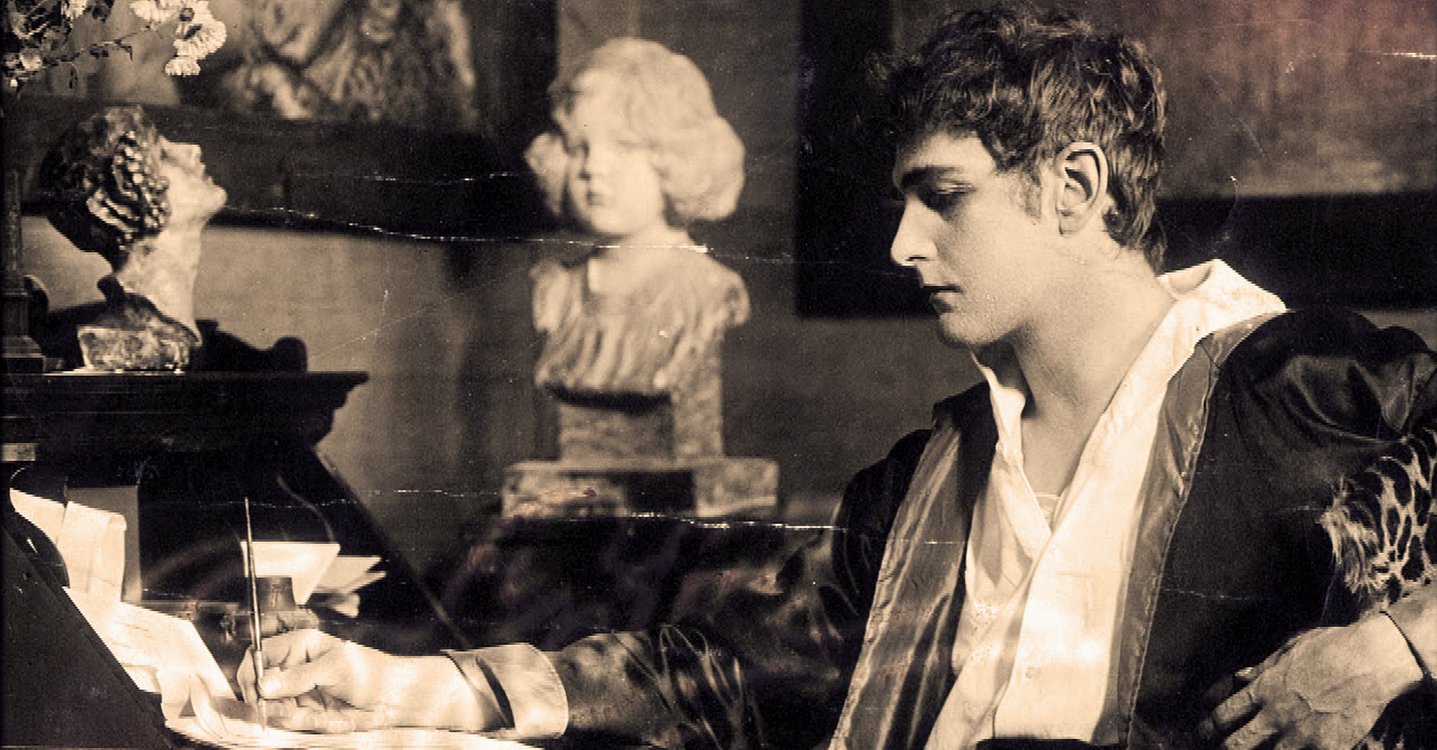
dad introduced Paul Swan into my life. A few years ago he was
clearing out a part of his basement and came across a painted
portrait of a relative on my mother’s side. None of us knew her in
life, but the back of the painting had a note tucked into it telling
us who she was and how I was related to her. Dad asked if I wanted it
so I took it. I looked up the artist’s name online, “Paul Swan,”
but could not find many details. As of this writing he does not have
a Wikipedia page. All I could initially find was he was an artist and
a dancer and, in his old age, was filmed by Andy Warhol. Somehow I
found out there were two people, Janis and Richard Londraville,
working on a biography of Paul Swan. I contacted Janis by email and
began an online correspondence with her. After telling her about the
painting I had by Swan she filled in many of the blanks about him,
who turned out to be quite the Renaissance man. When their book was
published I bought and read it. Born in 1883 in Nebraska, Swan ran
away from the farm at fifteen to Lincoln, then Chicago and New York
during which time he modeled, learned to draw and paint. He was a
much sought after portraitist and was also famous in his prime as a
dancer. He wrote and recited poetry, acted on stage and in early
movies and was a sculptor. He died in obscurity in 1972. The person
in the painting I have by Swan is my maternal grandfather’s cousin.
Swan painted it in his Carnegie Hall studio June 18, 1955. The note
behind the painting said she was a professional opera singer, played
piano, lived in N.Y.C. and had no children. After some time of
research, contacting opera halls and theaters to search their
archives, I came to a dead end. No one had any record of her. On the
back of one of Swan’s other portraits he quoted Dobson in black ink:
The
Core
Historical Literature of Agriculture “is primarily a collection
of landmark agricultural texts published between the early nineteenth
century and the middle to late twentieth century. These full-text
materials cover agricultural economics, agricultural engineering,
animal science, crops and their protection, food science, forestry,
human nutrition, rural sociology, and soil science. Teams of scholars
selected the titles in this collection for their historical and
scientific importance.” This free resource offers 2,084 books and
36 journals ranging from 1623 to 1969.
I
first came across this site several years ago when I was looking for
information on Buddy Rich. Drummerworld
“is a encyclopedia-like website and features Drummers from all
genres in the history of Jazz and Rock – from the past till present
times.” This addictive site includes photos, videos and extensive
biographies.
ScienceDaily
“features breaking news about the latest discoveries in science,
health, the environment, technology, and more — from leading
universities, scientific journals, and research organizations.”
Don’t forget to sign up for their free email newsletter.
Poets.org
“is produced by the Academy of American Poets. The site was
launched in 1996, becoming the original online resource for poems,
poets’ biographies, essays about poetry, and resources for K-12
teachers.” They also offer a free email newsletter.
After
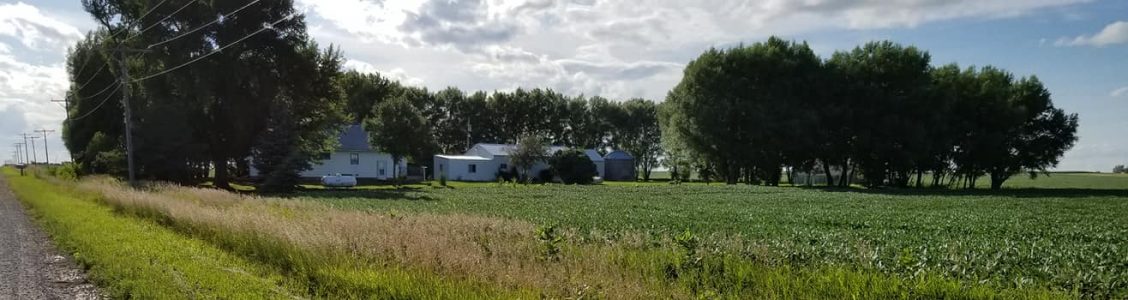
a very long, cool, rainy, wet spring, summer hit us with everything
expected: bugs, fast growing grass, faster growing weeds, heat,
humidity, thunderstorms, mowing, and more heat, humidity and bugs.
The mosquitoes we were used to in the city have been mostly traded
here in the country for biting flies, which have left me with tiny
bleeding wounds on my legs and arms if I forget to spray myself down
with repellent when I go out into the acreage. We have gone through
two containers of weed killer spray so far and are trying a homemade
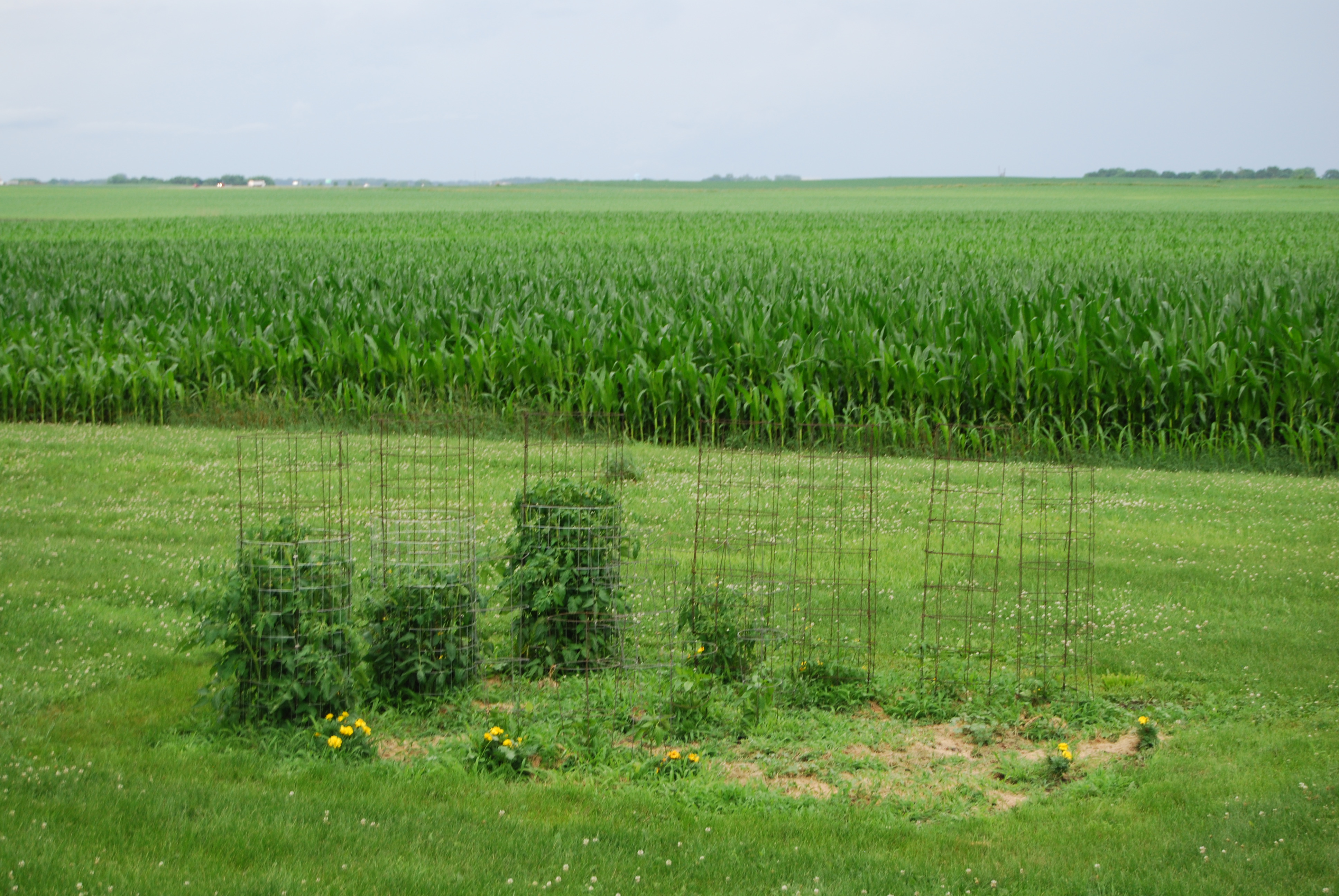
brew that is not working so well yet. We planted a garden of
tomatoes, peppers, green beans and cauliflower. The green bean seeds
were old, leftover from previous gardening in the city, and did not
sprout. The little cauliflower plants I bought two for a dollar
survived for a week. They just disappeared, so I don’t know if it was
bugs, critters or disease that got them. The tomato plants are doing
well, and the pepper plants are full of blooms and tiny peppers. The
rain this spring and early summer has been epic for Iowa and the
Midwest of America in general. This last year has been the
wettest here since 1895. Now with June giving way to July the
heat has ramped up, with temps reaching the low 90’s Fahrenheit.
Combined with high humidity it makes for some soupy days and nights.
Still, all in all, I will take a hot, humid summer day over a
freezing winter blizzard
any time.
I
was first introduced to the Merck
Manual around 20 years ago when my mother was diagnosed with
cancer. My dad gave my wife and I a copy so we could better
understand what my parents were dealing with, but also for our own
reference. The manual is both detailed and concise. For ailments they
list an overview, causes, symptoms, diagnosis, prevention, treatment
and prognosis. From their website, their Mission Statement reads: “We
believe that health information is a universal right and that every
person is entitled to accurate, accessible and usable medical
information. And we believe that we have a responsibility to protect,
preserve and share the best current medical information to enable
more informed decisions, enhance relationships between patients and
professionals, and improve health care outcomes around the world.”
A noble cause and a valuable web resource.
Once
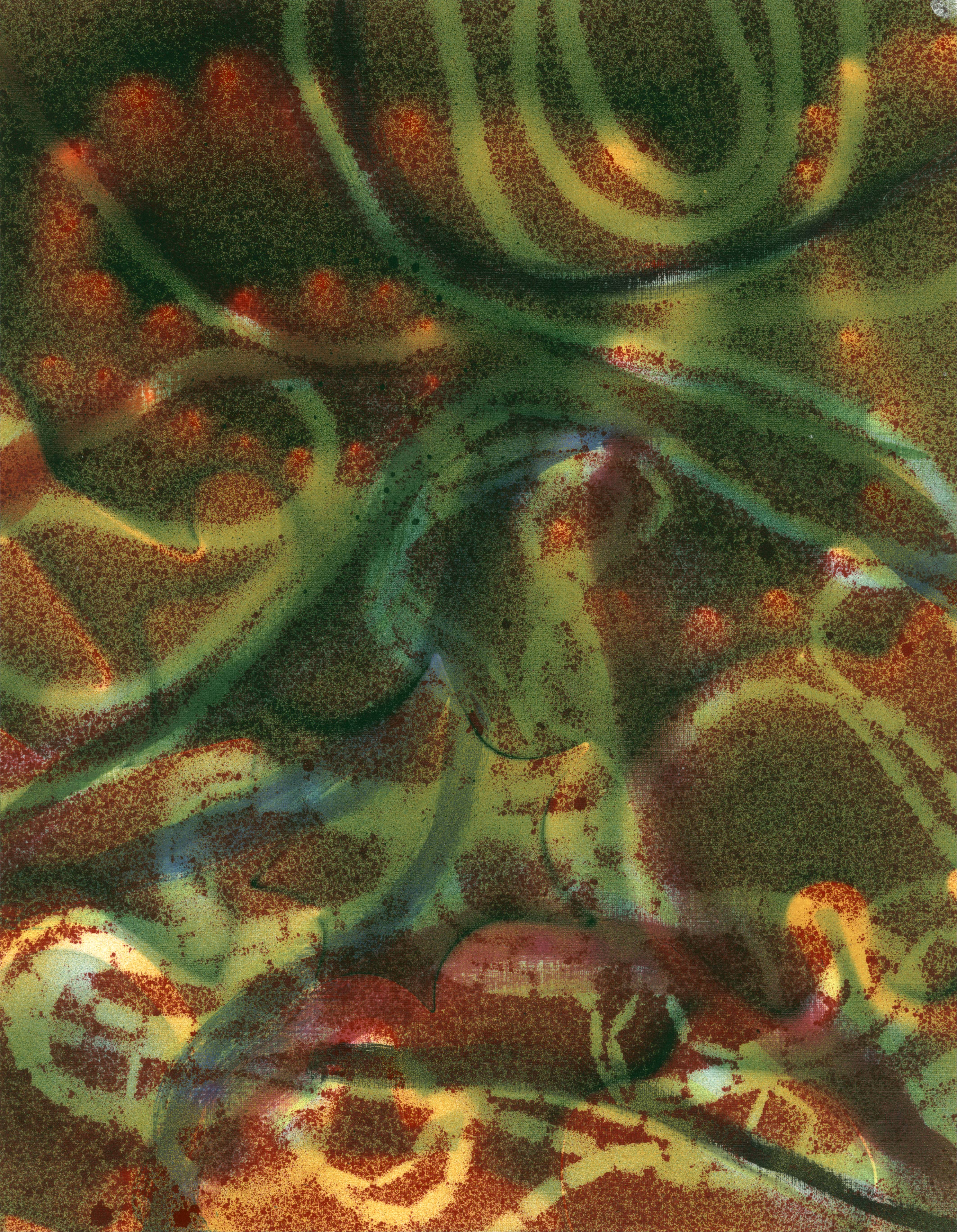
a month I highlight a piece of art I have created and posted on my
Fine Art America site. This one is titled Systematic
Ruin, from the Spray Art collection.
Recently Shelly went to a small family reunion of sorts. It’s called an Aunt Party. These gatherings started when some of the aunts in her family would hold a potluck to visit and play parlor games. All of those aunts are gone now, but the tradition is revisited every few years by other ladies in the family, mostly cousins. By custom they are still called Aunt Parties. She made this recipe found on the internet and it was a big hit. The main difference between this recipe and the one for egg salad we usually use is a lack of mustard.
Ingredients:
3
ounces cream cheese, room temperature
1/4
cup mayonnaise
1/2
teaspoon salt
1/8
teaspoon pepper
1/4
cup finely chopped celery
1/4
cup sweet pickle relish
1/4
cup finely chopped bell pepper, optional
1/4
cup finely chopped onion, optional
2
teaspoons minced fresh dill
8
large eggs, hard-boiled, chopped
6
croissants
Instructions:
1)
In large bowl, beat together cream cheese and mayonnaise until smooth
and creamy. Stir in salt, pepper, celery, and pickle relish. Add bell
pepper and onion, if using. Stir in dill and chopped eggs.
2)
Cover and refrigerate for at least 1 hour to allow flavors to blend.
A
paperback copy of this book has been in my library for several years,
unread until a few months ago. It looked like a depressing read just
from the front cover of a grubby, sad boy, taken from a still of the
movie made from the book. It is a memoir written by Frank McCourt
(1930-2009) beginning with his earliest memories in New York City,
his family’s move to Ireland and his growing up there until he
returns to America. His father Malachy is a kind hearted but hopeless
alcoholic who can’t keep a job. His long suffering mother Angela is
eventually reduced to doing whatever she has to to keep her family
alive when Malachy leaves for work in England during World War Two.
He does not send any money back to his family and eventually word
reaches them that he is still drinking up whatever money he manages
to make. There is much humor spread throughout the misery as Frank
recounts his struggles with his faith, dealing with colorful
relatives and neighbors, surviving sadistic school masters and
eventually discovering girls. His tone throughout is matter of fact
and even, allowing readers to evaluate the people and situations for
themselves. He won a Pulitzer Prize for the book and wrote two follow
up memoir’s titled ‘Tis and Teacher Man, neither of which I have
read. The movie made about the book got mixed reviews, and I don’t
think I will watch it because I don’t want it to tamper with the
characters in the book as I envision them. While much of the subject
matter is grim, most pages brought out at least a chuckle from this
reader. It could be the pathos the book evokes is what won it that
prize.
The
Foundation For Intentional Community
states their mission is to “support
and promote the development of intentional communities and the
evolution of cooperative
culture.”
Communes today
are associated with hippies and as settings for horror movies, but
exploring this site should help part the curtain of old stereotypes.
If
the suggested viewing Netflix offers you is coming up a little short
try What’s on Netflix
for some ideas. Whether you are looking for some recommendations or
want to dig into a sub-genre, it’s all there. A very useful site.
Gnod
is a project of Marek Gibney’s that allows you to “use the latest
technological advances to make us all discover more and better
things.” Input a few samples of music, products, art, literature or
movies that you like and Gnod will make recommendations of new things
to try.
Black
and WTF is full of funny and bizarre, mostly vintage, photos. The
site has not been updated for a few years, but it still makes for
addictive viewing.
A cabin we have stayed at in Wisconsin on the south shore of Lake Superior
Shelly
and I have been camping together since she was pregnant with our
daughter, who is now 30 and has four children of her own. We camped
in our home state of Iowa until the kids were out of diapers and
able to talk and feed themselves, then began venturing to neighboring
states. We ended up when the kids were teenagers in the Grand Tetons,
Rocky Mountains, Yellowstone, The Badlands, Black Hills, The Great
Lakes, and other places along rivers, lakes and in forests. We
endured countless bugs, torrential thunderstorms, a tornado, lost
gear, wet gear, wrong turns, smoking brakes in the mountains, vapor
lock in the middle of a busy intersection, a pack of thieving
raccoon’s, collapsing tents, howling coyotes, burnt food, cold food,
cold nights and days, hot nights and days, and even more bugs. Last,
but maybe worst, if you have ever gone on a long trip with a sullen
teenager you know what special kind of a situation they can create.
And then there are the forests, mountains, hills, flatlands, starry
skies, waterfalls, caves, rivers and streams, huge clouds, blowing
prairie grasses, flowers, peaceful wildlife, memorable sunsets,
winding highways and back roads, fishing, hiking, campfires, good
food, spectacular lightning storms, and, of course, smores. Whenever
we returned home from a camping vacation it would be with mixed
feelings and reviews. As time passed and the vacation took hold in
memory, most of the bad would filter out and leave what was truly
important. Before too long you are ready to venture out again, with
the road ahead and expectations in tow.
Off The Back Porch
Stay informed with curated content and the latest headlines, all delivered straight to your inbox. Subscribe now to stay ahead and never miss a beat!






 Off The Back Porch