
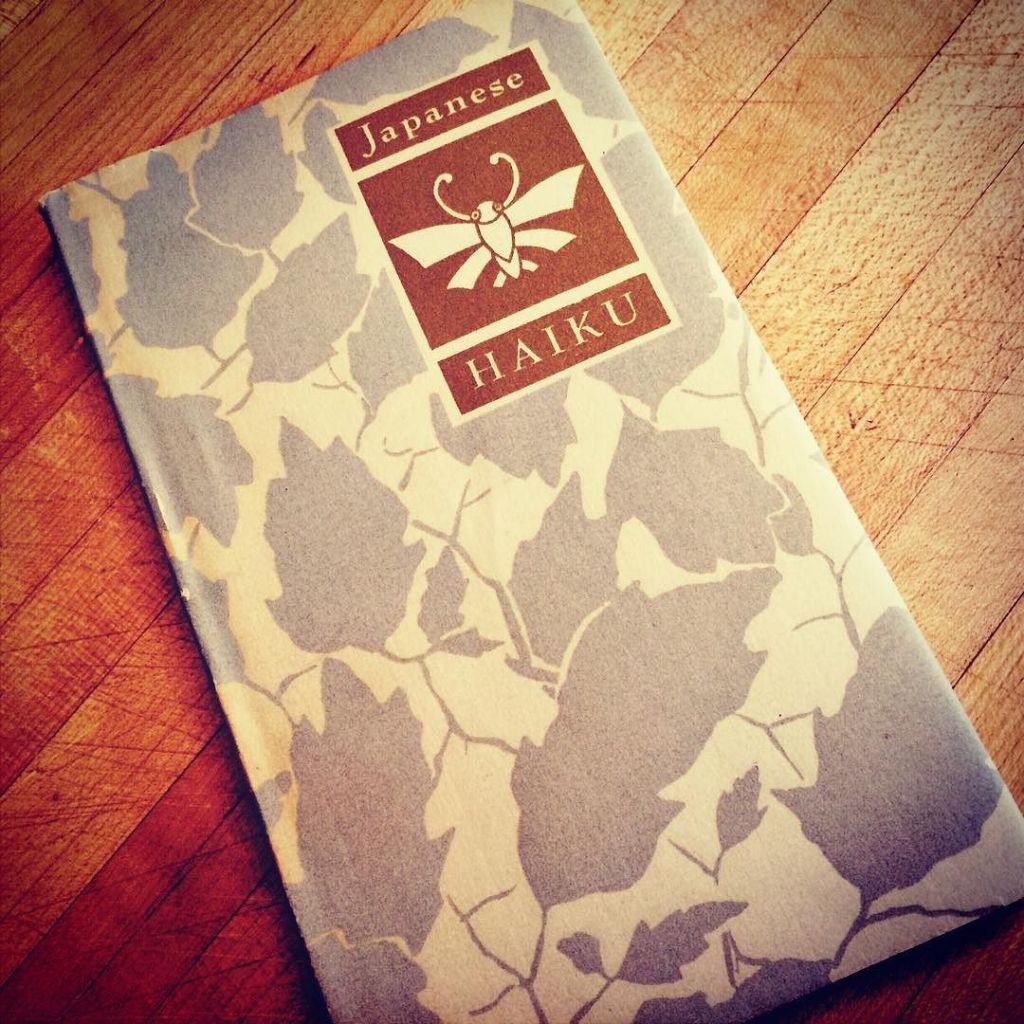
I am currently enjoying a little book titled Japanese Haiku. It is copy written 1955 by The Peter Pauper Press and I have no idea how it came into my possession. The introduction is short and concise, explaining that haiku was originally the first part of the tanka, a five line poem, but eventually haiku became popular as a separate form. Haiku consists of three lines, the first and third lines contain five syllables, while the second line has seven. In this very limited structure of only seventeen syllables the very best haiku poets have been able to convey emotions, flora and fauna, the seasons and weather and “an implied identity between two seemingly different things.” My little book informs me that the greatest haiku writer was Basho (1644-1694) followed by Buson (1715-1783) and then Issa (1763-1827). It also says haiku is impossible to translate literally because they are “full of quotations and allusions which are recognized by literate Japanese and not by us; and are full of interior double-meanings almost like James Joyce. And the language is used without connecting-words or tenses or pronouns or indications of singular or plural – almost a telegraphic form.” Finally, the intro concludes “the haiku is not expected to be always a complete or even a clear statement. The reader is expected to add to the words his own associations and imagery, and thus to become a co-creator of his own pleasure in the poem.” With all that in mind here are my three favorite poems in the book (so far, as I have yet to finish it) by what it regards as the three best haiku writers.
BASHO:
Twilight whippoorwill…
Whistle on, sweet deepener
Of dark loneliness
BUSON:
A short summer night…
But in this solemn darkness
One peony bloomed
ISSA:
Over the mountain
Bright the full white moon now smiles…
On the flower-thief
 Off The Back Porch