The Long Rain and Moon

During a recent rainstorm that included a spectacular lighting show both south and north of us (somewhat rare) I had a niggling thought. Had I read something as a kid about it raining for centuries during early Earth? Or could it have even been longer? The next day I looked through my home library and found a book titled “Rocks All Around Us.” It had a copyright of 1959 and was obviously written for young people. It reads:

“Long ago the ball of rock on which we live was very hot. It was so hot that all the rock was melted. And for millions of years it stayed that way.

Then, little by little, the outside of the ball cooled off. A thin crust formed. It was stiff and solid. In some places it was wrinkled. Those wrinkles were the first mountains.

There were cracks in the crust. Steam and air shot out of the cracks. The steam made thick clouds that hung all around the earth. The clouds wouldn’t let the sun through even for a minute.

Then it began to rain. Never has there been such a rainstorm since. It rained and it rained, day and night, without letup. It rained for years. It rained for centuries. For the earth was still sizzling hot. As soon as the rain touched the earth, the water turned to steam. The steam would go up in clouds and come right down again as rain.

By and by the outside of our rock ball really cooled off. It got so cool that the rain stopped turning into steam. Between rains the sun came out. The rain water ran off the rocks. It flowed into the low places of the earth’s rock crust. Those low places became seas and lakes.

The lowest place of all was what we now call the Pacific Ocean. For there was an old, very deep scar here. It had formed before the rock crust had got quite stiff. A great mass of soft rock had flown off from this spot and shot up into space. It had become the moon.”

Much writing for young people has been enchanting to me through the years and I love how the very simple wording of the passage above flows so simply and beautifully.

As for the possible facts (also known as theories), several of my internet searches have brought up a handful of these rainy epochs during earth’s history. And there are several CGI videos online showing the earth being smashed into and peeling off the debris that would become the moon. Did the earth shed what would become our moon, and did it rain for possibly millions of years? Good things to ponder while enjoying a flashing thunderstorm or a glowing full moon.
A Formidable Circle


Alexis de Tocqueville

“I know of no country where, in general, there reigns less independence of mind and true freedom of discussion than in America,” Alexis de Tocqueville wrote in Volume 2, Chapter 7, of Democracy in America. “In America, the majority draws a formidable circle around thought. Within these limits, the writer is free; but woe to him if he dares to go beyond them. It isn’t that he has to fear an auto-da-fé, but he is exposed to all types of distasteful things and to everyday persecutions.”

Spring, Branches and Mowing

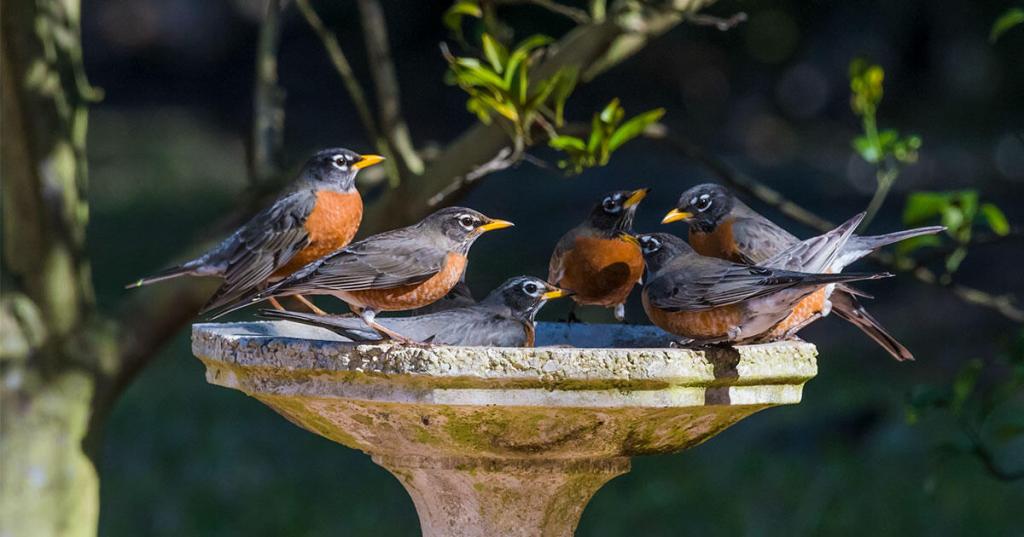
Round of Robins

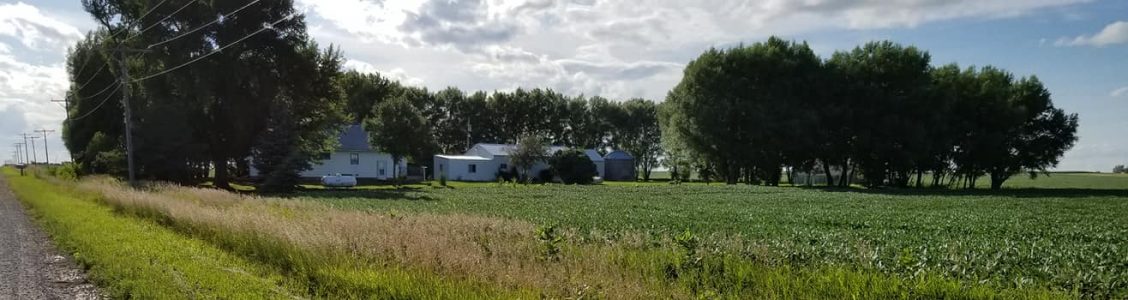
The trees and bushes are sprouting and leafing, the grass is that very light but vivid green and the wind is blowing almost nonstop. We are still trying to clean up the acreage of all the winter-fall branches and sticks before the first mow of the season, which needs to happen soon. Because of the constant wind, some areas we have picked up five times now this spring. Dandelions are popping up all over the acreage, the Robins are either mating or already nesting and now there are baby bunnies hiding in the Iris beds or under the outbuildings. We hired a guy that works where our son does to cut down the seven dead ash trees that grew along the border of an old corn crib in the back of our yard. He works full time and does this on the side. Should be out to begin in a couple of weeks. Emerald Ash Borer has killed most all the ash trees in our area. We see the dead trees all around our county, big ones with branches hanging low, drooping and dropping, no buds or leaves, the bark sloughing off in big sheets. Today I took the freshly charged battery and some gas down to the shed where the lawnmower has rested for the cold months and it fired up first try! We had a very still day (hardly any wind) which is rare around here, and were able to burn a lot more sticks and branches. Our son came out and mowed for us while we tended the fire. A busy but good spring day.

Battle of the Little Bighorn

I recently finished an excellent book by Stephen E. Ambrose titled: Crazy Horse and Custer, The Parallel Lives of Two American Warriors.

The opening paragraph of the Introduction to the book reads thus:

“This is the story of two men who died as they lived – violently. They were both war lovers, men of aggression with a deeply rooted instinct to charge the enemy, rout him, kill him. Men of supreme courage, they were natural-born leaders in a combat crisis, the type to whom others instinctively looked for guidance and inspiration. They were always the first to charge the enemy, and the last to retreat.”

This book was a fantastic read for me, following both men through their youth and early adult years until the battle that ended them both, one on the battlefield and the other later killed while in custody.

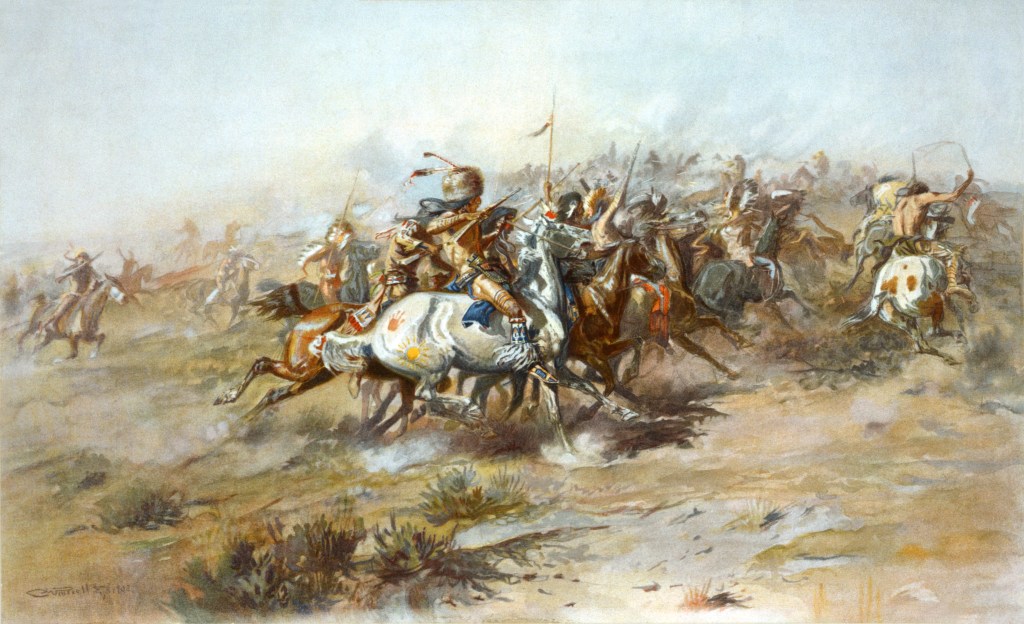
There is, of course, no photographic documentation of the Battle of Little Bighorn while it was occurring. My family visited the battlefield several years ago. It was a running battle. The tombstones are laid out along the way, marking where the dead fell. Around a small hill are the last ones.

However, this painting (above) is so full of energy and action and battle that you might guess the artist was a witness. You can hear the gunfire, Indian screams and yelps, Calvary horns, horses galloping. The painting shows ponies riding full speed, Indians killing and going for the kill and Calvary holding out and shooting back to the very last man. Titled “The Custer Fight” it was painted in 1903 by the extremely talented Charles Marion Russell.

The Best That I Have

The following quote is from a magazine article about the actor William Hurt. Younger folks will remember him from some Marvel movies late in his career playing the role of General Ross. I would encourage them, and anyone else, to travel back to 1980 and watch the movie “Altered States.” Then make your way through the rest of his movies from the 80’s and 90’s and continue as far as you are still interested. He reminds me of Dennis Hopper and Philip Seymour Hoffman in that you might not like everything they were in, but you would watch it just the same because if they were good, they were usually outstanding. Hurt died in 2022.

Make no mistake, Hurt was dedicated to his craft. “I never explain my movies — it just ruins the emotion,” he told the Post. “I love saying that line. There is a point to explaining what I do, but at some point you just have to do it. The work is the best that I have to offer. That’s what I want to be eloquent at.”

Bliss, Birds and Taking Care Of Things

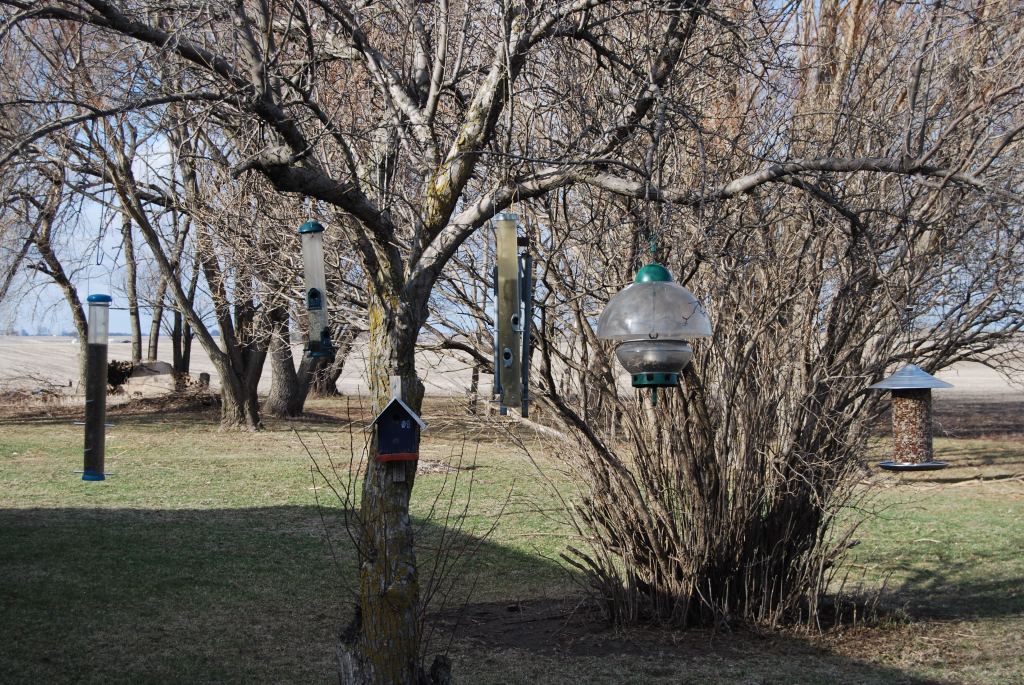
Our bird feeding station

Recently I had a most fantastic day. It was during late March, the temp in the upper forties and the sunshine coming down at mostly full force through a few strands of clouds. I had been raking leaves and doing other small clean-up jobs around the acreage when I eyed the poor, weather battered homemade chimes hanging limply among the trees and poles, some broken on the ground. For some reason collecting and fixing them became my instant focus. I gathered up some thin wire, needle nose pliers, some S hooks and a few other things I might need and sat on my bench in the sun, facing the south. I laid out my materials and tools around me and got to work. Two of the chimes needed to be completely rebuilt. There was a light breeze from the east, but not enough to bother or chill me. I took my time, cutting out old, disintegrating material and replacing it with new. Occasionally I would stop and lean my head back, eyes closed, and feel the early warm spring sun on my face. To do something enjoyable, without knowing beforehand we wanted to do it, might be one of our most rewarding experiences. That was how I was feeling. It was a bliss, after such a long, cold snowy winter, to be sitting outside in sunshine working on something.

The birds have been gradually returning to our place. So far I have seen mourning doves, sparrows, crows, finches, cardinals and of course the ubiquitous robins. There are some hawks in our area, and we will occasionally see a bald eagle. I have not heard the coyotes much so far this spring, nor have I seen the usual explosion of baby rabbits, but those could both change at any time.

Our road is starting to get a little busier with the farmers trucks and tractors coming and going, with planting right around the corner. We are coming to the time of year, as my Dad says, “when it’s time to start taking care of things again.”

Northeast

Sometimes, during a winter night, I will step out on the back porch and look around. I can see Highway 20 to the northeast. A low spot in the landscape allows me to observe vehicles traveling east and west for about 10 seconds before they are hidden by a rise on either side. The ones going west are only two bright headlights, like yellow saucers, while the eastbound show a long beam of white light stretching ahead of them into the darkness. I don’t walk out to the porch and watch the highway traffic a mile away because I am sad or happy. I do it just to observe. Watching motion in this world has always fascinated me. Waves rolling in and out, little birds flitting from tree to tree. Shadows starting long, getting short, then long again in the other direction during the course of a day. A steady summer rain splashing on a slow flowing river, geese flying right over your head while migrating, dogs playing with each other, a campfire burning nicely in front of you surrounded by friends. Back to the highway. There are some semitrailers outfitted with exterior lights that outline the whole truck, dozens of bright lights, making them look like they are ready for some mission in a superhero movie. I asked my son-in-law what was up with all the semi lights and he said none of them are required or necessary. They do it just to stand out in the night, to show off. But once you decorate your truck with them you better keep them all lit, because if any go out and you are caught by the state, you will be fined for faulty lights. Back to the porch. There go a couple more brightly lit semis, through my little viewpoint, off to the east and west. The wind is kicking up from the south, so I stand back against the house, looking again to the northeast and the highway. I feel the temperature dropping and turn to go inside. It is warm in there. Outside the wind blows and trucks keep passing by.