One
of my favorite movies is Little Big Man, a revisionist Western
directed by Arthur Penn, based on the novel by Thomas Berger. It
stars Dustin Hoffman as Jack Crabb, born in 1849. He is being
interviewed in 1970 as a 121 year old man recollecting his life among
both whites and Indians on the Great Plains. Hoffman’s voiceover as
the ancient Crabb during the movie adds a dimension of both humor and
tragedy as he describes what he is thinking and feeling on top of the
regular dialog between the other characters. Jack and his sister are
the only survivors of an Indian attack and are taken in by another
tribe. His sister manages to escape while Jack is raised by the tribe
for several years until he is captured by the U.S. Calvary and finds
himself living in white civilization again. Several years go by and
Jack tries and fails at several careers until he is again attacked by
Indians who steal his wife. While searching for her he ends up back
with the tribe that raised him. And so the story continues with Jack
living back and forth between Indians and whites, encountering
happiness and hardships but never really finding his place in the
world. He encounters both Wild Bill Hickok and General Custer during
his adventures and ends up as the only white survivor of The Battle
of the Little Bighorn. The movie closes with the ancient Jack alone
in his room pondering his long life. In 2014 Little Big Man was
selected to the National Film Registry of the Library of Congress,
joining the ranks of Citizen Cane, Star Wars and It’s A Wonderful
Life, among many other great films. If you have not seen the movie,
watch it. The book is pretty good, too.
Food
Routes Network, “provides communications tools, technical
support, networking and information resources to organizations
nationwide that are working to rebuild local, community-based food
systems. FRN is dedicated to reintroducing Americans to their food –
the seeds it grows from, the farmers who produce it, and the routes
that carry it from the fields to their tables.”
“Since
1982 the Bulwer Lytton
Fiction Contest has challenged man, woman, and (very precocious)
child to write an atrocious opening sentence to a hypothetical bad
novel. We’re honored to receive thousands of odious entries from
around the world each year.”
Gangrule
“is a look at the emergence of organized crime in New York through
1900–1920, leading up to the well documented prohibition era. The
database of historic events, family histories and photographs is
based on research from primary sources including police, federal,
court, immigration, business, and prison records.”
Check
out 999 Ideas by Steve Gillman
for “ideas for inventions… political theories… mental
experiments… new business concepts… story outlines…
philosophical thoughts… essays… and much more.”
A
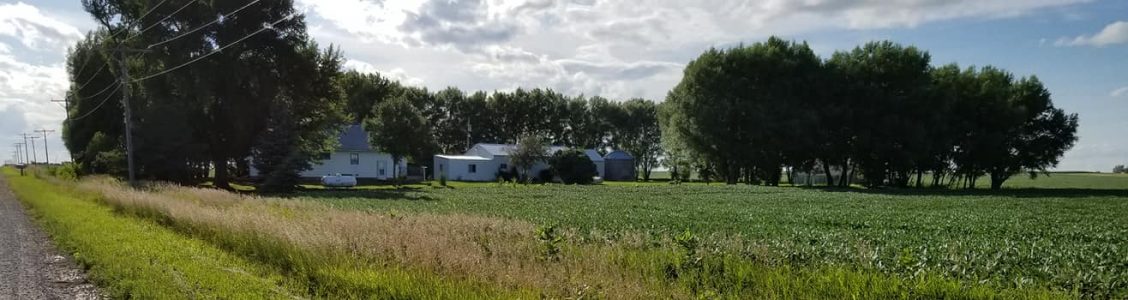
group of maybe fifty or more dragonfly’s descended on us for a couple
of days mid August. They were making merry, flying here and there,
and then they were gone. Moths and other bugs come and go, fluttering
around the yard light at night. The cicadas are constant with their
song. We had a group of crows strutting around and making a racket
for a few days before they moved on. The other birds have scattered,
even the robins are rare right now. This seems to happen every year
for several days, even when we lived in the city; where they
disappear to I don’t know. The bird feeders have been untouched for a
week now. The toads are still crawling around here and there, and
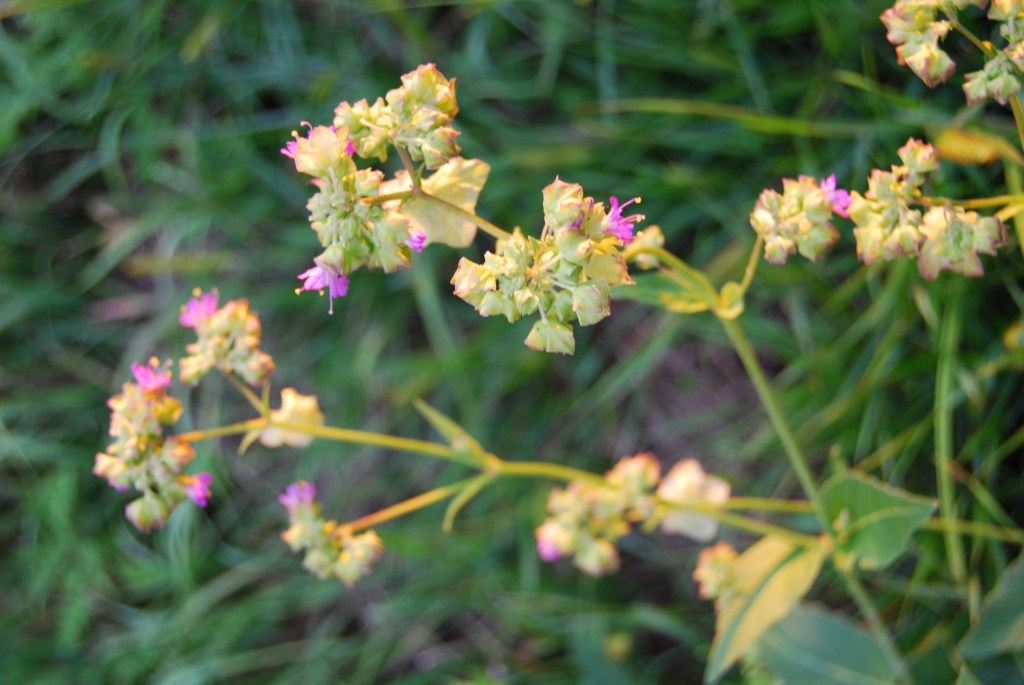
once in a while we have to shoo one out of the garage. The weeds in
the ditch in front of our acreage grow up and eventually die down,
making way for the next species, which continually changes the view.
Some of them have beautiful flowers and I have been trying to
identify a few, but most remain a mystery to me for now. The dust
that comes up from our gravel road can be seen for maybe a mile
before the vehicle causing it, usually a truck, comes into view.
After it passes the dust will linger for awhile, slowly drifting and
settling in the fields. Several times the crop dusters have flown
over a nearby field doing their job, dipping so low one looses site
of them then climbing steeply to turn and make the next pass. When a
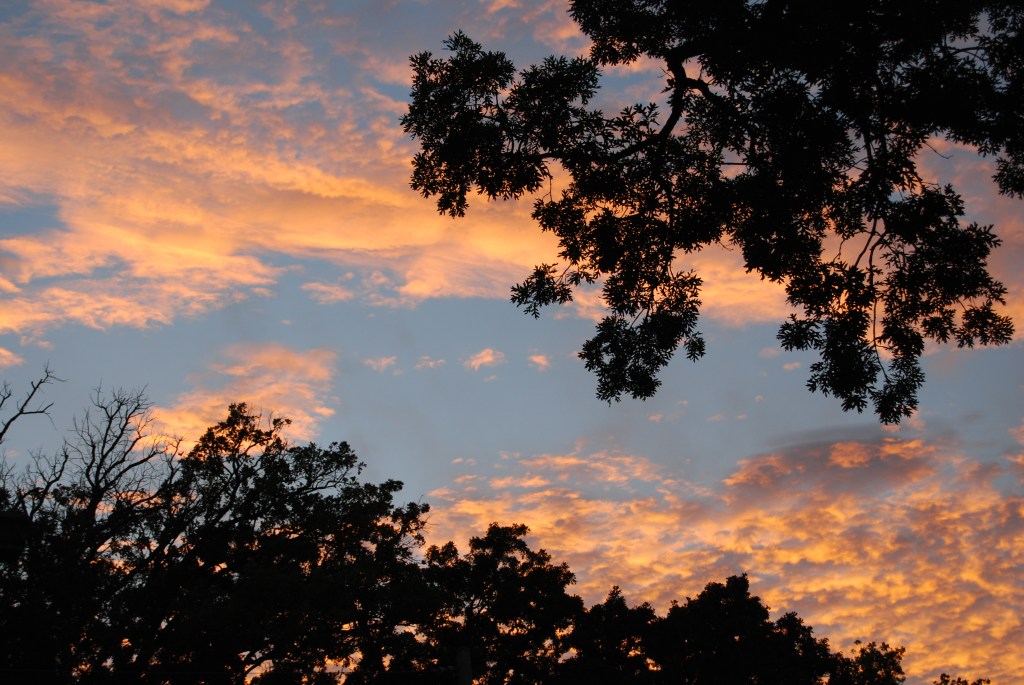
rainstorm approaches, usually from the west, we can see the rain
falling in the distance sometimes for several minutes before it is
upon us. It is a slow, dreamy time of the year that one wishes would
never end.
The
Motley Fool provides “a variety of solutions to improve many
areas of your financial life, including your investment portfolio,
personal finances, real estate holdings, company, and career.” I
have used this site off and on for years to consult for various
financial matters. They offer comprehensive information on stocks,
how to invest, credit cards, bank accounts, loans, retirement
planning and much more. Worth a visit.
I
discovered this little culinary gem several years ago and will
continue to use it until I can cook no more. Whenever you cut up
vegetables get in the habit of putting the leavings in a baggie in
the freezer. Onion ends, cucumber ends, carrot ends, end chunks from
broccoli or cauliflower, tomato parts, peppers, you get the idea.
Anything you would normally throw in the trash from your veggies take
10 seconds and put them in that designated baggie in the freezer.
Once it is full, fill up a pan with water, add the contents of your
freezer stash, and boil for at least 20 minutes, or until it smells
so good you want to sample it. Add whatever spices you most enjoy
then let the broth cool. I pour mine into various sized empty butter,
cottage cheese and dip containers and freeze. Then comes the best
part; add the thawed broth instead to a recipe that calls for plain
water, to some fried foods (including ground beef, chicken or pork)
instead of oil, to casseroles, soups, to boil noodles, or even use as
a marinade. When using a slow cooker, use the broth. I have even
added the broth when making chili and it seems to me to contribute
another layer of flavor. I also boil chicken and beef bones for
specific broths, but the veggie broth is more versatile.
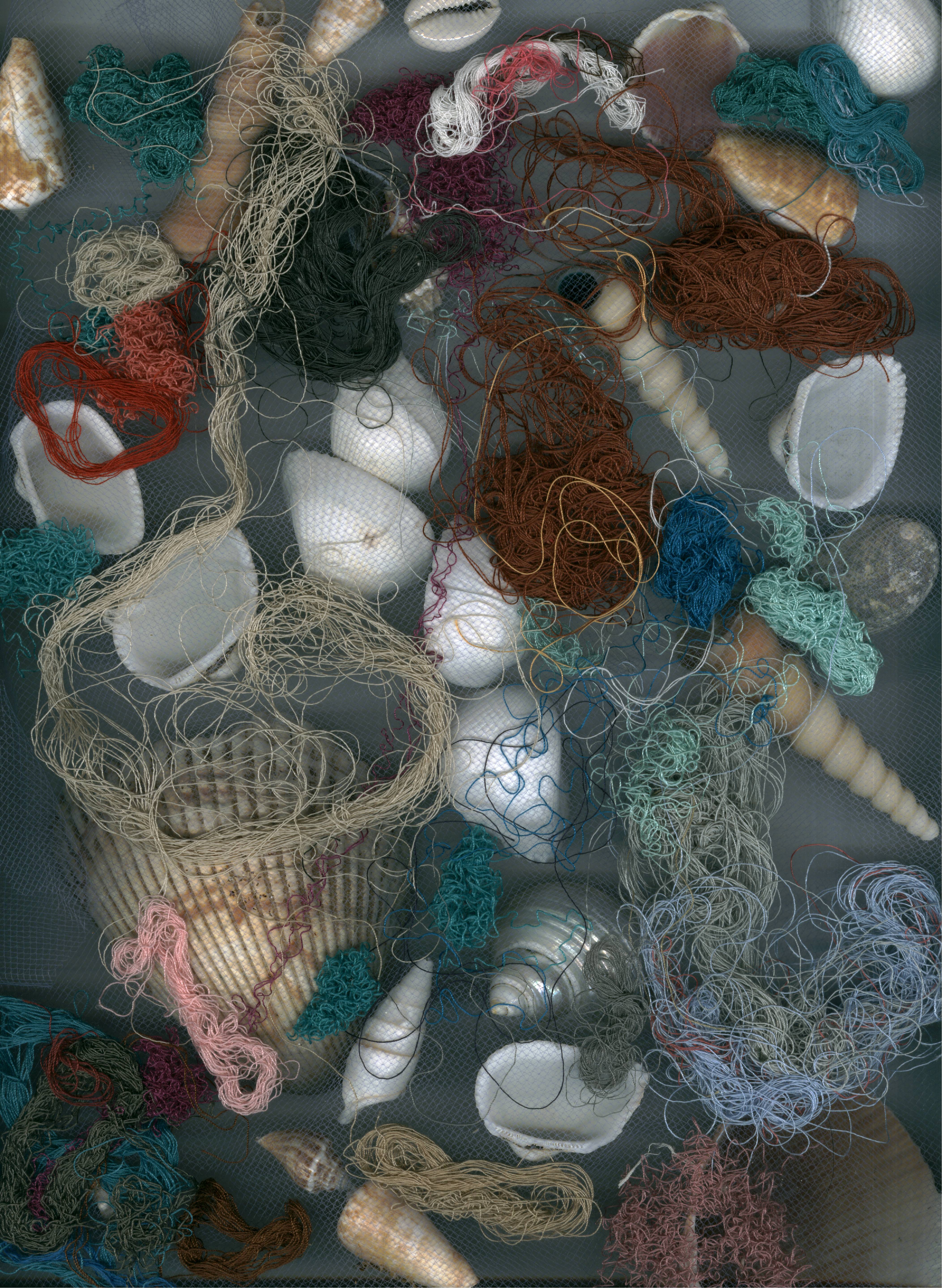
Once
a month I highlight a piece of art I have created and posted on my
Fine Art America site. This one is titled Thread
And Shells from the Scanner Still Life Collection.
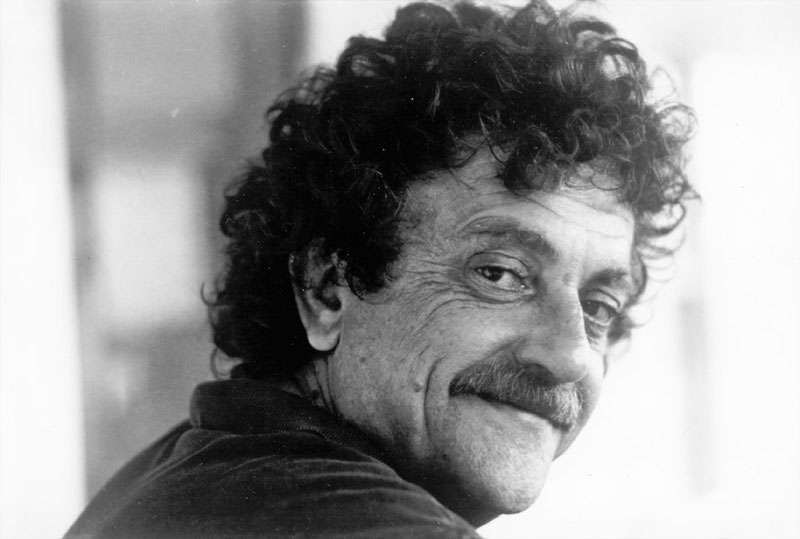
My
first exposure to Kurt Vonnegut (1922-2007) was not through reading
his books but from watching the movie Slaughterhouse-Five, based on
his novel of the same name. It was put on heavy rotation in the
1970’s on our local NBC affiliate television station, so I ended up
watching it multiple times. Our hero, Billy Pilgrim, survives the
World War Two firebombing of Dresden and goes on to marry and have
children. At some point he ends up in a zoo on the planet
Tralfamador. It is a quiet, thoughtful movie that tends to stick with
you. When I figured out the movie was connected to a book I wanted to
check out the author, and I’m glad I did. He didn’t only write
science fiction, employing dark humor and satire in his novels.
Themes of religion and war run through much of his work, as does
pathos and religious hypocrisy. Reading Vonnegut for me is like
sitting down to visit with an old friend and catching up with what
has been going on. There is both familiarity and anticipation
involved, but the main feeling is you are going to enjoy it. If you
have not read him Slaughterhouse-Five is a good enough place to start
as any. You might just make a new friend.
Wilderness
Connect is a great resource to to learn more about protected
public wilderness areas, “found in most states, but concentrated in
the west, they protect lush forests, arid deserts, snow-capped peaks,
dank swamps and sandy beaches. Yet, the reasons Americans love
wilderness are even more diverse than the areas themselves.”
“As
a permanent home for spontaneous art, Doodlers
Anonymous is a modern art blog featuring a vast archive of
creative inspiration, hand-drawn interviews by contemporary artists,
doodle challenges and prompts, giveaways, and a catalog of art-based
goods.”
StarDate
offers a constellation guide, moon phase calculator, sunrise and
sunset calculator, meteor shower schedule, lunar and solar eclipse
schedule, when to view planets, a primer on the solar system and much
more. A good resource.
Kanopy
partners “with public libraries and universities to bring you
ad-free films and series that can be enjoyed on your TV, mobile
phone, tablet and online.” My library began offering it for free
last month and I have really been enjoying it. If your local library
does not offer it yet put in a request.
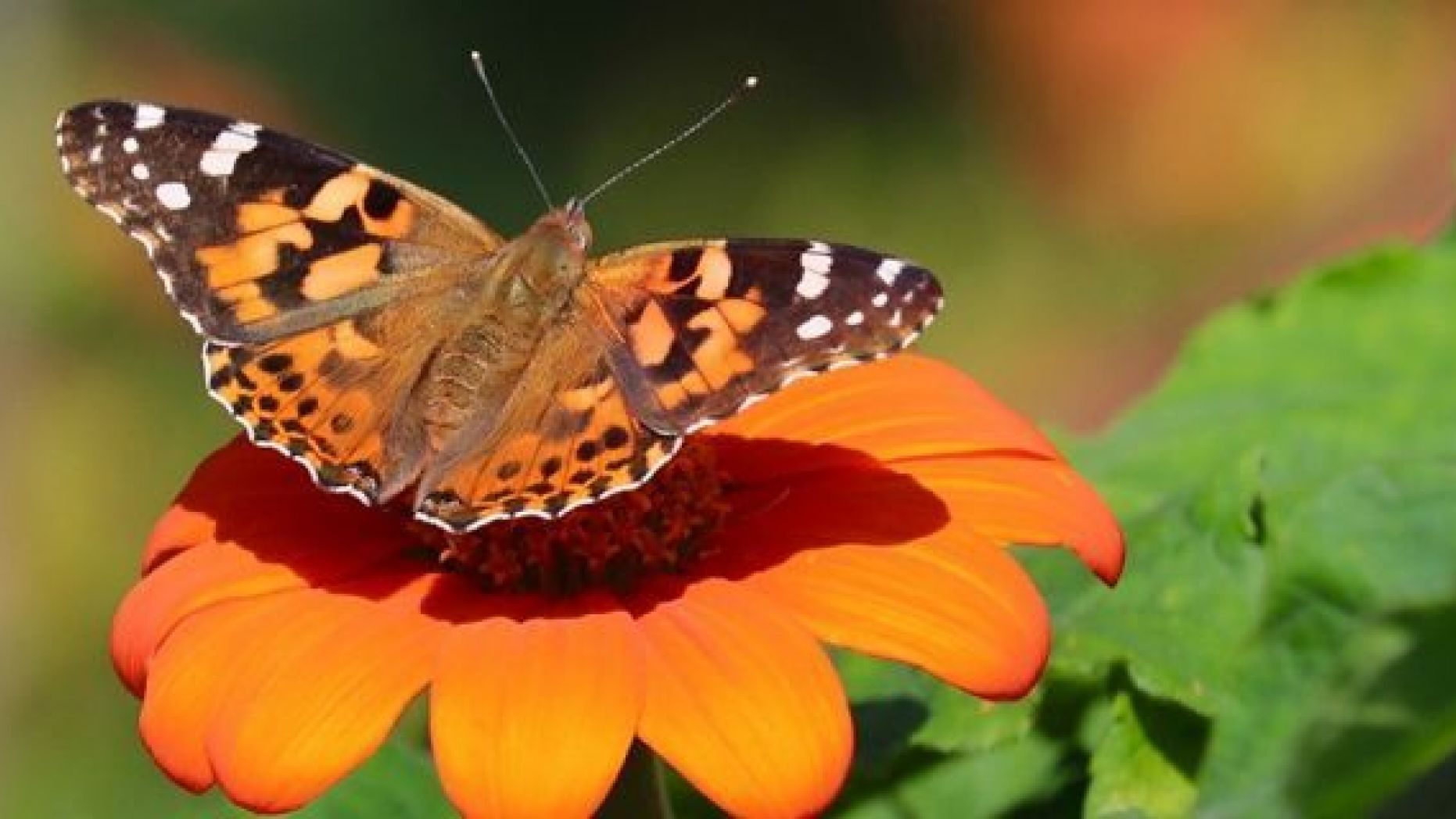
In
early August there suddenly appeared en masse thousands upon
thousands of painted lady butterflies flitting and flying about, so
many that at first it seemed like a plague had hit us. Those not
being smashed in traffic on the highways were lighting on crops,
trees, weeds, bushes, our driveway and lawn. For several days
hundreds of them would scatter away in front of us wherever we walked
on the acreage. Now, less than two weeks later, they are mostly gone.
Some research revealed they are found all over the world and migrate
south to north in the spring then make the trip back in the fall. But
since their lifespan is only two to four weeks none of the original
travelers return, as it takes multiple generations to make the round
trip. The butterflies reproduce along the way and each succeeding
generation continues the journey, one that is ingrained, absolute and
unwavering. They do what must be done to continue the species,
completing their part of the migration cycle before dying. I wonder
if we will be seeing caterpillars soon.





 Off The Back Porch