A Raccoon and More Birds

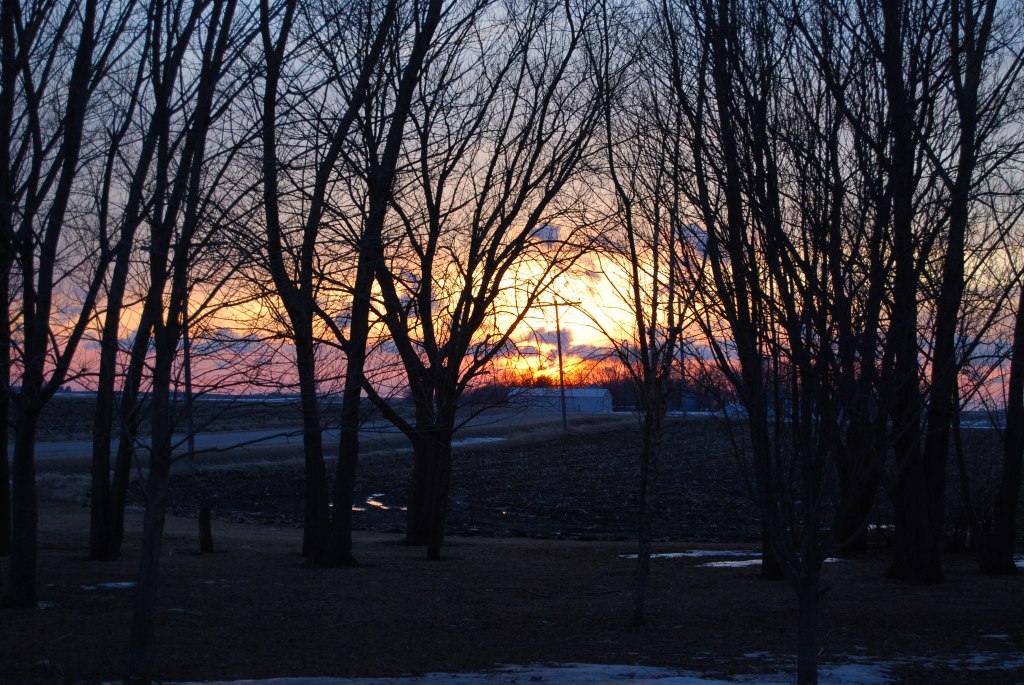
Late winter sunset on the acreage

Recently on our acreage the dogs treed an animal about eight feet from the ground where three branches formed a crook. It was not moving and we could only see the hump of its back and its brown fur blowing in the wind. To find out what it was I reached up with my walking stick and poked it. It moved a little, but stayed hunkered down in the crook. Figuring I had its backside, I went around to the other side of the tree and poked it again. Up came the sad little bandit face of a raccoon. I stepped away and turned to talk with Shelly about what to do (my solution was going to involve a rifle) when it decided to make a break for it and get out of that tree. Down it came, running on the ground along side the machine shed, stopping a couple of times to tangle with the dogs until we called them off and it disappeared under the grain bin through the dryer hole. Now when we walk around the place the dogs stop and sniff at the hole and Steve will even sit and stare at it, hoping for another appearance. On March 1st we noticed the first robin on the place, and the next day I saw the first flock of geese heading north. Looking at the lopsided V formation of the flock reminded me of the old joke: Have you ever noticed how one side of the formation is always longer than the other? (The other person ponders for a moment) You know why that is? (More pondering, then an admission of no, they don’t know why that is) Because there are more birds on that side!
Spring Buds and Dog Treats

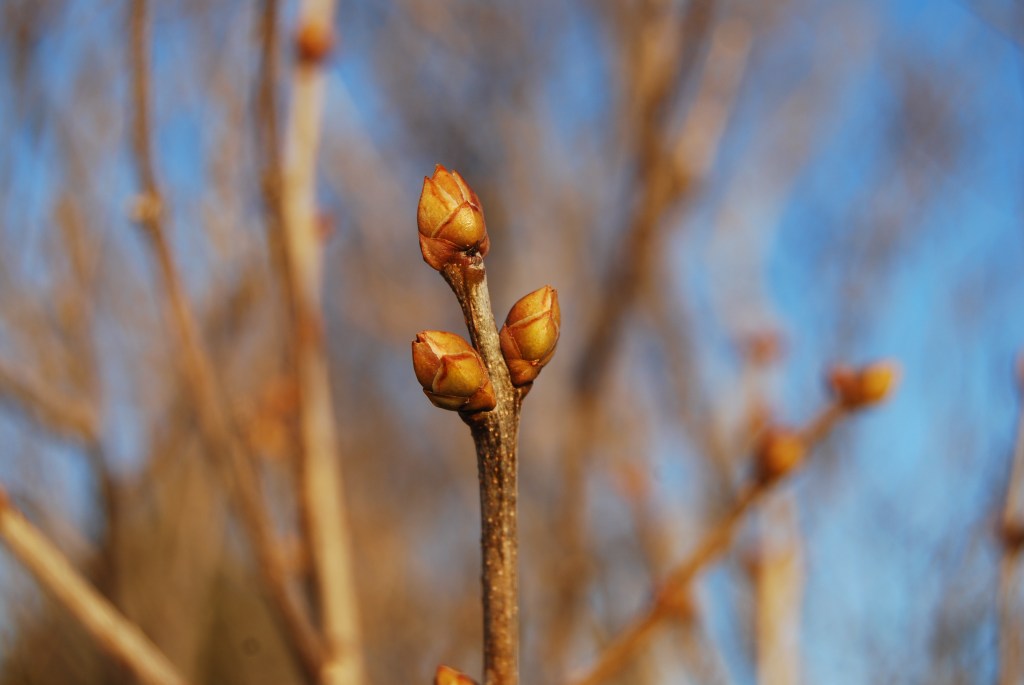
Lilac Buds By David Jacobi

A few days ago while walking down the driveway to get the mail (in the country most everyone has a mailbox at the road) I stopped to look at some of the lilac bushes that run along the front of our property. Over the years I have noticed that the buds of many trees and bushes start to grow during February, and our lilacs are full of big ones waiting for the command to open up. After months of snow and cold, seeing those large buds brought a smile to my face. Finally, some proof that the snow and ice and cold that surrounds us will not remain forever. After over a year of living in this part of Iowa it has become very apparent why there are so many wind farms dotting the landscape here and there. The last little snow storm that came through a few days ago dropped less than an inch of snow but the wind blew so fiercely that it created drifts here and there around the place over two feet high. Our two dogs, Marley and Steve, have discovered an outdoor snack of almost unlimited supply, namely rabbit poop. They sniff along with their noses down, eating the little pellets as they go. We have called them off, only for them to give us hurt looks then sneak off to an area of the property where we can’t see them to continue the feast. If only the rabbits would clean up after the dogs we would have a nice little system operating out here.

Quiet And Solitude

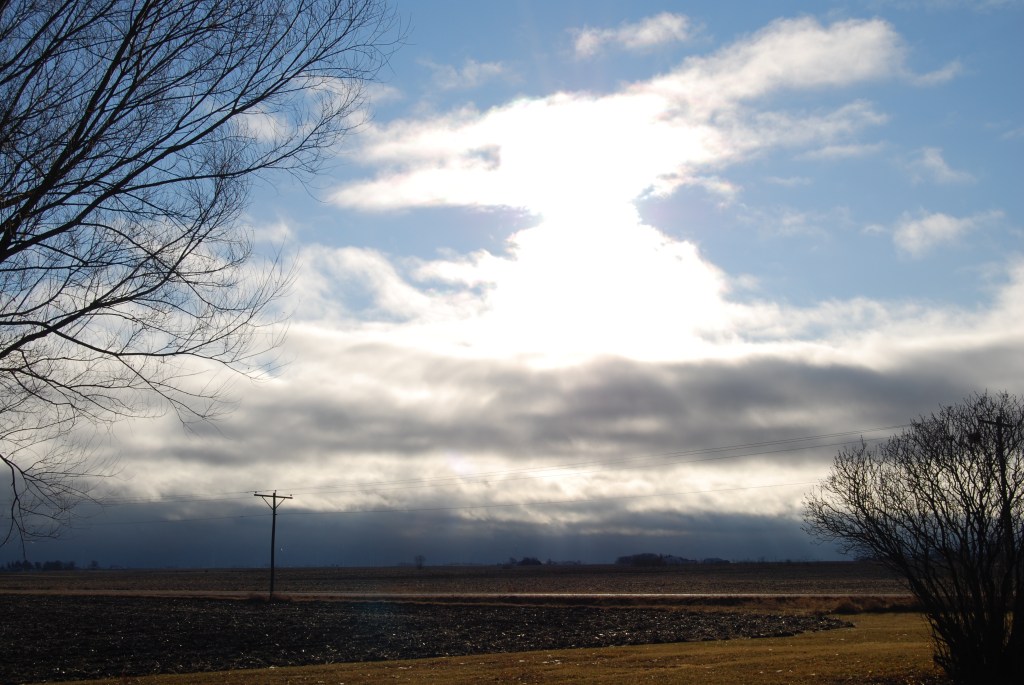
Morning clouds looking south

One aspect of living in the country that has taken me some time to adjust to is the quiet and solitude. Having lived only in a city up to this point I was used to being surrounded by sounds and people. Cars driving by the house, people walking their dogs, joggers, kids on bikes, neighbors coming and going and doing yard work. The only traffic here are people driving to and from work, most of whom we don’t know. That changes in the spring and fall when we all have to share the gravel roads with the farmers in their tractors. The sounds here are traffic from the highway if the wind is right, an occasional train whistle from the Union Pacific tracks, and the coyotes some nights. During storms we also hear the wind howling across the fields and through our trees. Of the two acreages closest to us one is occupied part time and the other lacks a house, with only outbuildings on the property, which makes for very quiet neighbors. Not having any stores around has made us tend to bundle the stops we make when we drive into town, to save time and gas. Neither one of us is complaining about any of these changes, nor would we want to go back to the city. Such a major shift from the familiar, even when desired, takes time to settle. So far so good.

Rabbit Tracks

Rabbit Tracks

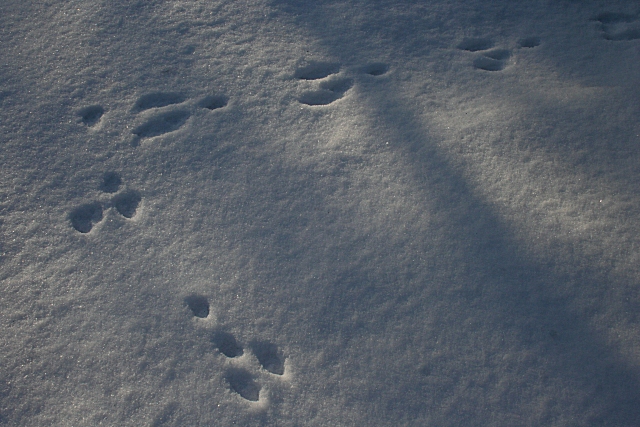
There have been rabbits here long before we bought this acreage, and in the winter some live under the machine shed. I have tried blocking and filling in the holes they make but they still get in. A few weeks ago the dogs chased one into a chain link fence next to the shed. In it’s terror to avoid the dogs it became lodged half way through the fence and was screaming as the dogs chewed on it’s hindquarters. A horrific scene to discover. It was dark and by the time we had called the dogs off and could make out what had happened, the poor creature was too far gone. I grabbed a rifle and put it out of it’s misery. The next day when I could see I went out to remove the rabbit from the fence and it took me several minutes to finally get it free. A reminder that not everything about living in the country is pleasant. The packs of coyotes that roam our area got close enough a few nights ago that we worried about the safety of our two dogs, especially Marley, the oldest at 11. We called the dogs into the house, knowing they could assume the role of the doomed rabbit if surrounded and attacked by a pack of coyotes. After a recent overnight snowfall I went out during the day to check the mailbox with the two dogs. I smiled as I noticed our yard was crisscrossed with hundreds of rabbit tracks.

Open Vistas

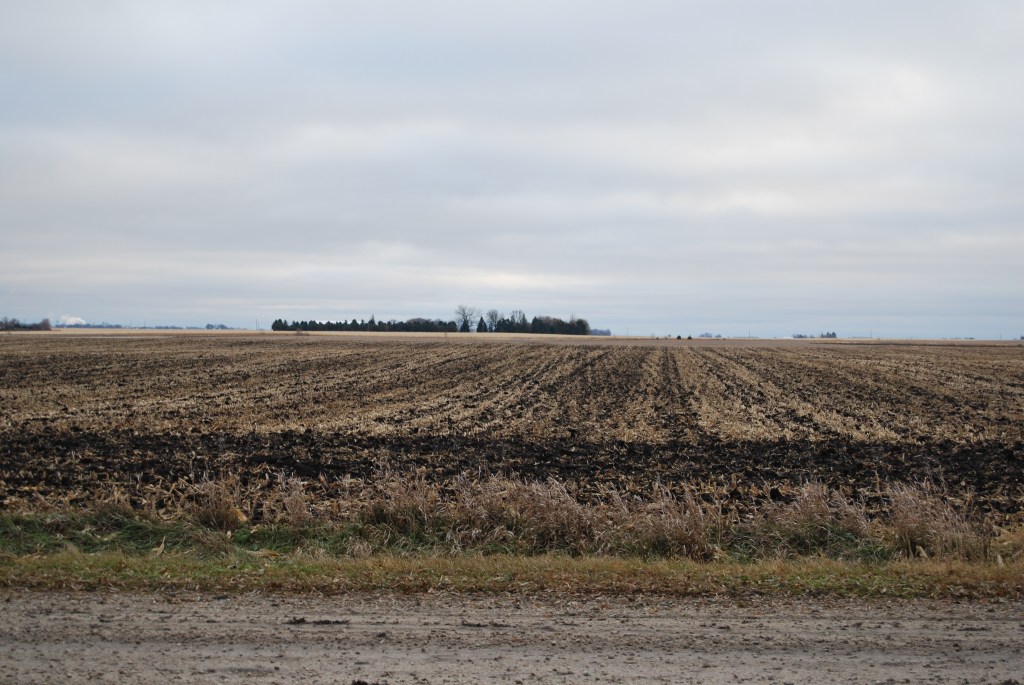
Our southern vista after the harvest

The local farmers recently finished harvesting the crops along our road and around our acreage, opening up the vistas. Once again we can see the surrounding water towers, farms and co-op elevators miles away as well as the distant traffic moving along the highway. Some truckers outline their rigs with bright colored lights. During the evening as they drive along emerging from behind one slope and disappearing behind another they look like huge lit up fish swimming across the landscape. We were surrounded by corn this year and for a few days after the fields were harvested the chaff was a little thick blowing into our yard. We raked and burned the stuff a couple of times, but most of it eventually blew across our acreage and into the next field. The field mice are trying to move into the garage and outbuildings for the winter, but thankfully there is no sign of them in the house. We hide poison in the outbuildings so the dogs can’t get to it and traps loaded with peanut butter in the garage, but so far there has not been much activity. Within the last week I heard two packs of coyotes yipping and howling at each other fairly close to us, but I couldn’t see them in the darkness. They went quiet soon and I haven’t heard them since then. They will be back. The seasons are still battling with each other, the snow blowing one day and the warm sun shining down the next. We all know what the outcome of the fight will be, but I still can’t help rooting for the underdog.

The Harvest

The field to our east

The brisk fall winds have begun blowing and the first hard freeze of the season settled on us a week ago. We picked all of the bell peppers and the red and green tomatoes from the garden the day before the freeze. As I was picking them I noticed dozens of little yellow flowers on the tomato branches. If not for the weather change those plants could have gone on indefinitely. The day after the freeze the plants had obviously been killed, their branches drooping and leaves curled up. The tomatoes have been stored in the garage on a long table to ripen, if they will. We have talked about what to do with this huge bounty, and I think there will be plenty of fried green tomatoes, chili, spaghetti, goulash, homemade V8, roasted tomatoes, and anything else we can think of while they either ripen or rot. The freezer is already full, so the only other alternatives are canning or eating them. We have shared with family, neighbors and coworkers as well. Our first garden here on the acreage produced more tomatoes than we ever experienced in the city, and only seven plants were involved. The field crop harvest has finally started, but slowly. It has been a wet fall and the farmers must wait for the fields to dry out or to freeze. There have only been a few advantageous days so far when the fields become busy with harvesters, but otherwise the rain has kept them away. The sun is setting earlier at each days dusk, and the high temperatures are declining, giving a daily reminder of what is to come.

The New Neighborhood

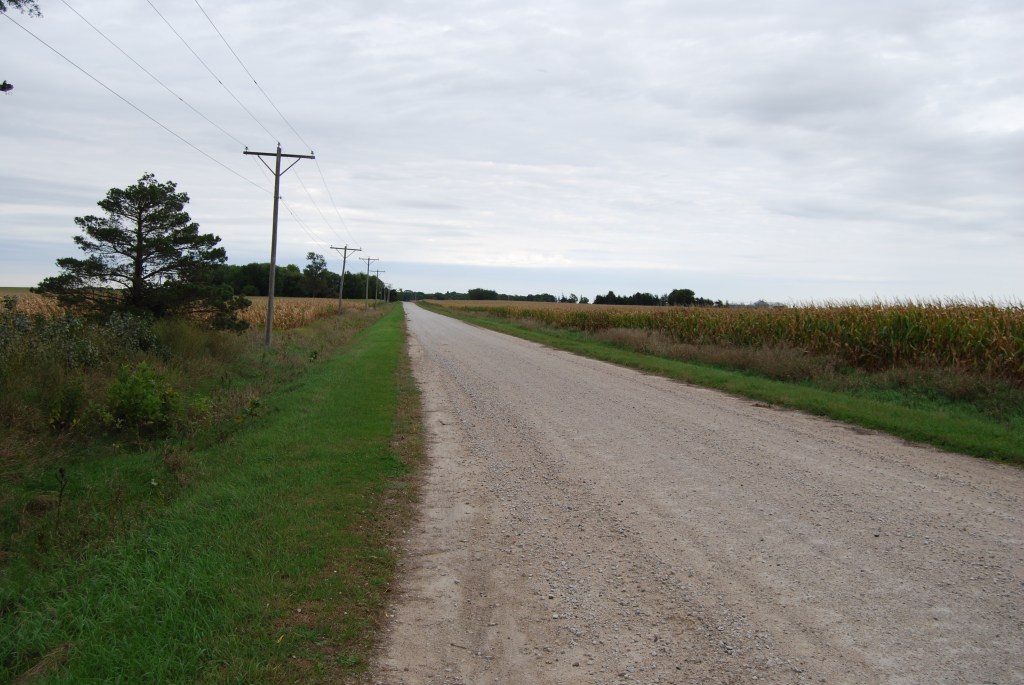
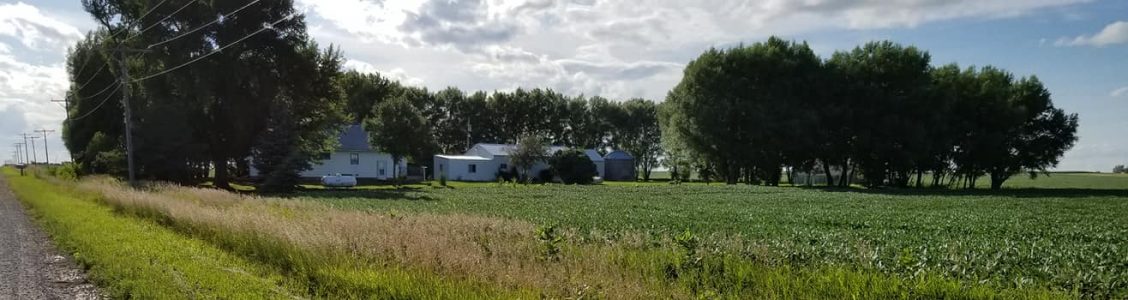
In front of our house looking east down our road

Along the two mile stretch of our gravel road from the county highway on our east until the first cross road to our west, there are seven acreages. That leaves much room between neighbors, but not so much that you don’t know each other. The first neighbor to give us a welcome and introduce himself and his young son gave us some sage country advice, “Out here we are friendly, but we like to be left alone.” Last year we were visited by another one who has an art degree, works at a local co-op, and helps run a custom jewelry business with his wife. Yet another works as a physical education teacher, and the other two are a cattle rancher and the crop farmer who owns almost all the land around the rest of us. On the property closest to us to the east the house is gone. The out buildings survive and the family keeps it up, mows, and the yard light still burns at night, but no one lives there. What used to be the eighth acreage was sold a few years ago, all the outbuildings removed, and now corn grows where the yard was. The only clue that anything but crops ever existed there is the short, weedy gravel driveway approach from the road, and the four digit house number sign leaning next to it on a post. There are two streams that wind through the area and cross under our road at either ends of our two miles. A cemetery with a couple hundred graves sits on a hill overlooking our road and one of the streams. The oldest burial I have found dates from 1881. Usually the vehicles on the road belong to local folks going to and returning from jobs, giving a wave if they see you in the yard. The traffic will soon increase to a steady stream of farm equipment, bringing in the fall harvest.

Summer Continues

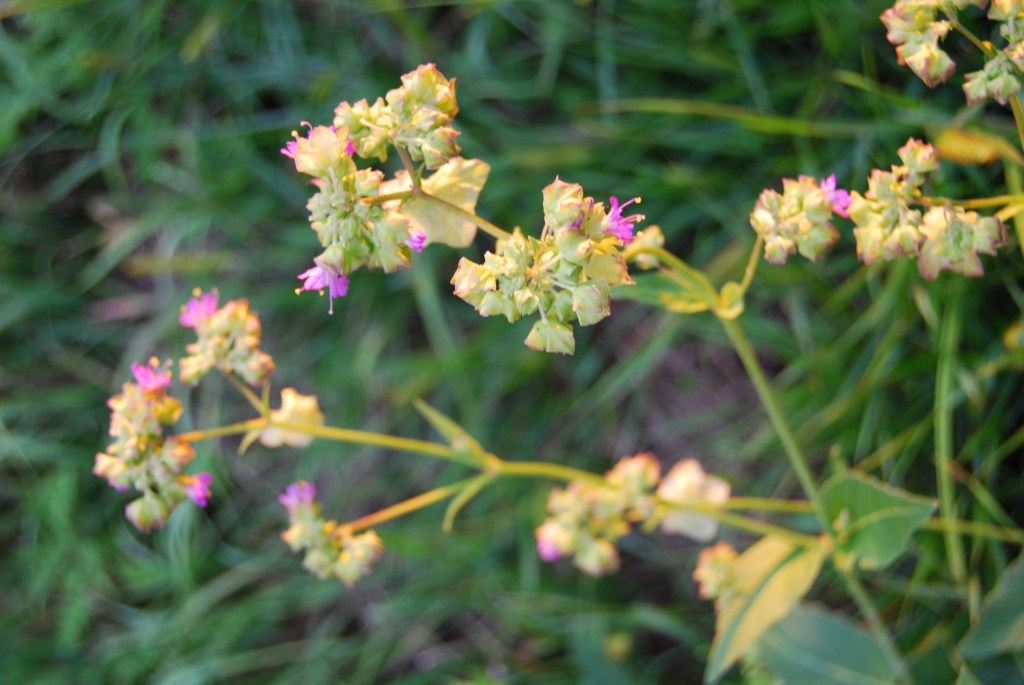
Flowering Weeds Along Our Road

A group of maybe fifty or more dragonfly’s descended on us for a couple of days mid August. They were making merry, flying here and there, and then they were gone. Moths and other bugs come and go, fluttering around the yard light at night. The cicadas are constant with their song. We had a group of crows strutting around and making a racket for a few days before they moved on. The other birds have scattered, even the robins are rare right now. This seems to happen every year for several days, even when we lived in the city; where they disappear to I don’t know. The bird feeders have been untouched for a week now. The toads are still crawling around here and there, and once in a while we have to shoo one out of the garage. The weeds in the ditch in front of our acreage grow up and eventually die down, making way for the next species, which continually changes the view. Some of them have beautiful flowers and I have been trying to identify a few, but most remain a mystery to me for now. The dust that comes up from our gravel road can be seen for maybe a mile before the vehicle causing it, usually a truck, comes into view. After it passes the dust will linger for awhile, slowly drifting and settling in the fields. Several times the crop dusters have flown over a nearby field doing their job, dipping so low one looses site of them then climbing steeply to turn and make the next pass. When a rainstorm approaches, usually from the west, we can see the rain falling in the distance sometimes for several minutes before it is upon us. It is a slow, dreamy time of the year that one wishes would never end.

August Ambiance

Part of our privacy fence

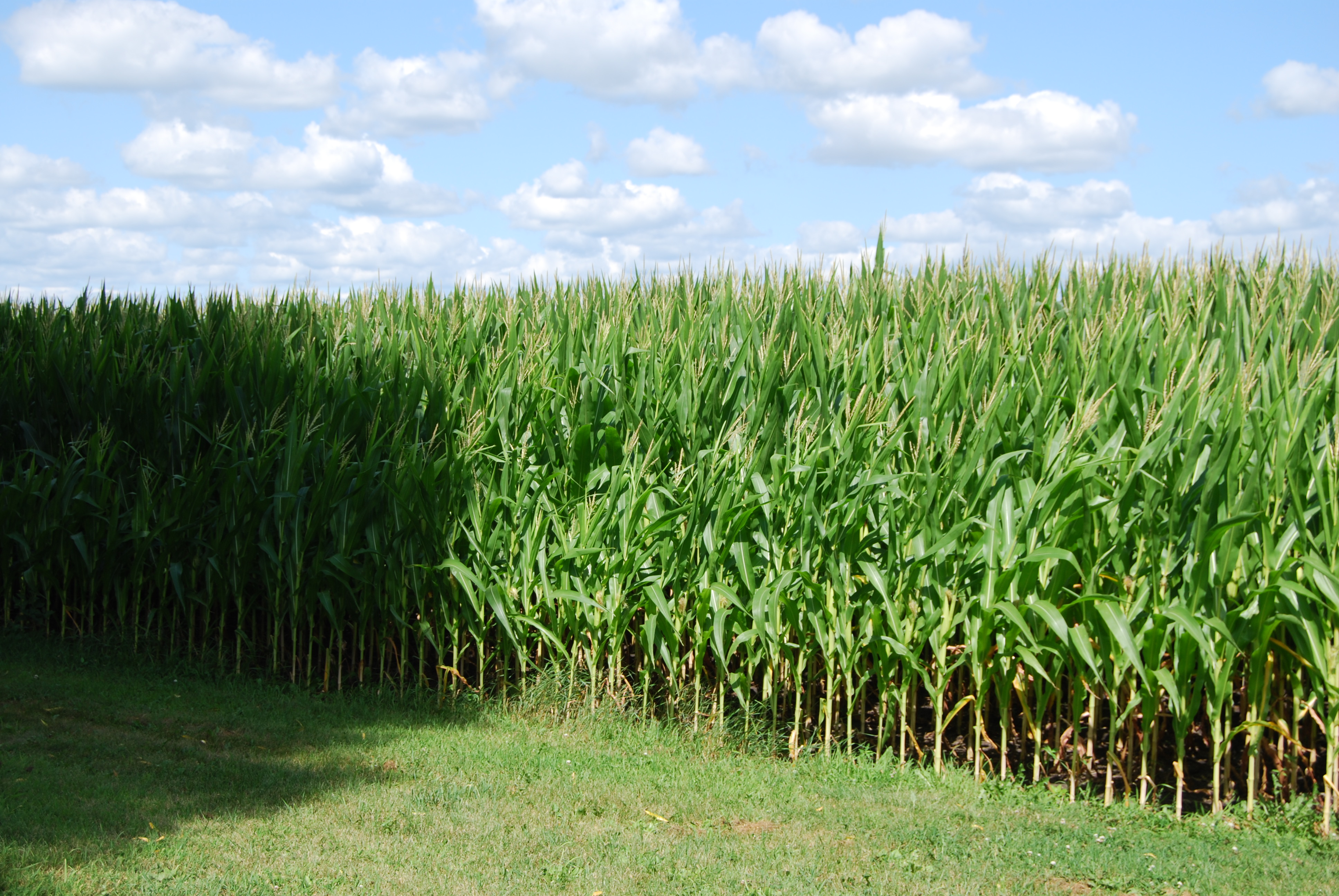
Having lived in Iowa my entire life, seeing vast acres of corn and bean fields became commonplace even as a child. As a city boy I was used to driving around the crops to get to other places, but now that we moved to the country we live in the crops. We are surrounded by a swaying wall of corn on all sides of our property, a living seven foot high privacy fence. We can only see from ground level the tree tops of our two neighbors a quarter mile away to the east and west. Living on two acres in the middle of a vast cornfield tends to turn the eyes up or down. Up, one studies and admires the clouds and the big blue sky they float through, and down are the wildflowers, flowering weeds, dragonflies, butterflies and toads. To find them all in one spot we walk out to the ten foot wide ditch that separates our front yard from the gravel road. We decided not to mow the ditch to see what would come up, which most of our neighbors do as well. There are a wide variety of grasses, flowers and weeds that I have not taken the time to try to identify yet but we do recognize Daylillies, Queen Anne’s lace, milkweed and lilac scattered throughout. The toads are most vociferous after a rain and if water is left in the ditch. They vary in color from browns to greens, but always with some bumps and intricate patterns on their skin. They seem unconcerned when picked up, and many times will not even hop away when set back down. The rabbits have multiplied as usual, which keeps the two dogs busy chasing them back into the corn when they see them. Come dusk the lighting bugs begin flying and blinking by the thousands, making for a wonderful glowing show while the robins chirp and chatter as they sing down the sun.

Summertime

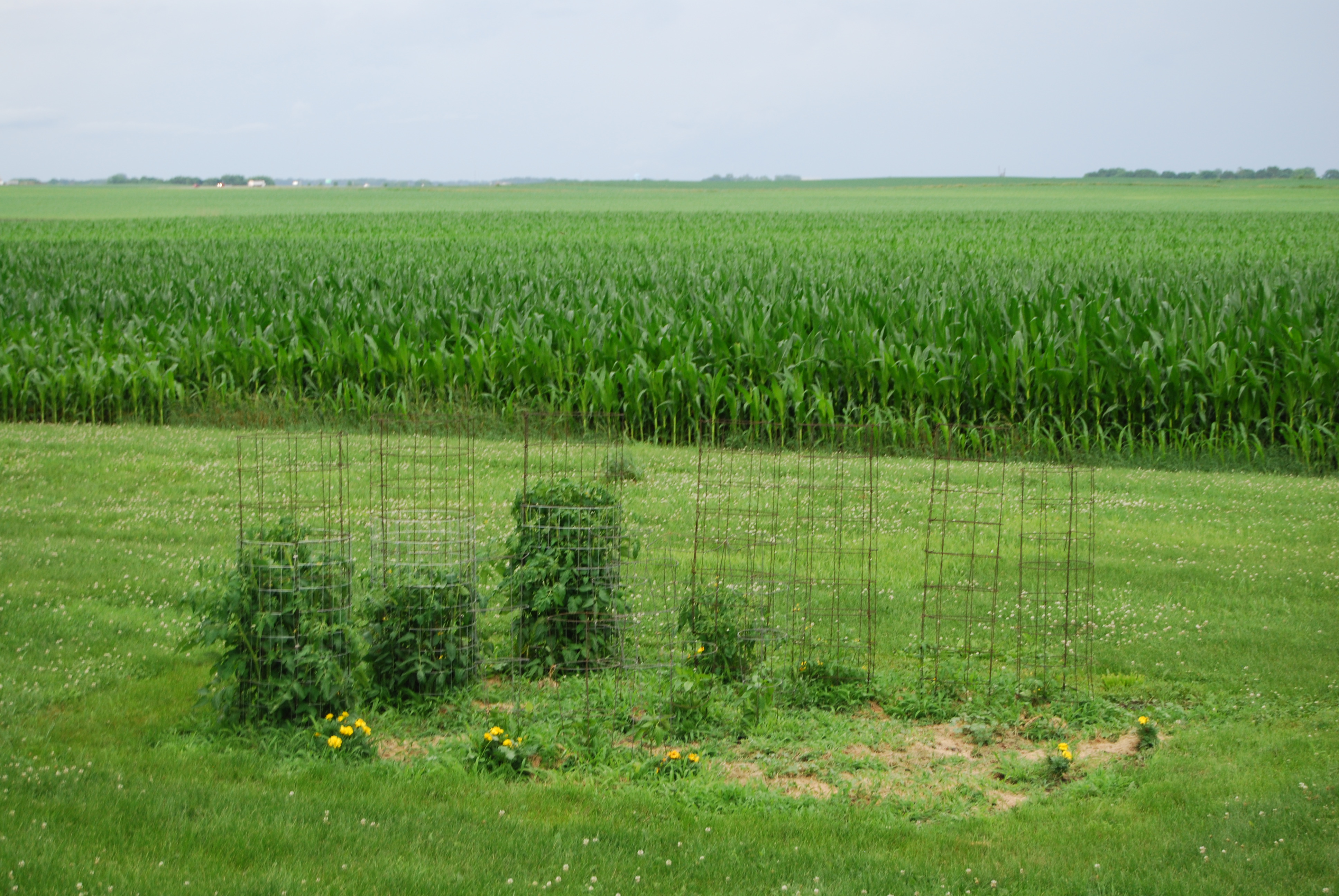
Our garden and a sea of corn

After a very long, cool, rainy, wet spring, summer hit us with everything expected: bugs, fast growing grass, faster growing weeds, heat, humidity, thunderstorms, mowing, and more heat, humidity and bugs. The mosquitoes we were used to in the city have been mostly traded here in the country for biting flies, which have left me with tiny bleeding wounds on my legs and arms if I forget to spray myself down with repellent when I go out into the acreage. We have gone through two containers of weed killer spray so far and are trying a homemade brew that is not working so well yet. We planted a garden of tomatoes, peppers, green beans and cauliflower. The green bean seeds were old, leftover from previous gardening in the city, and did not sprout. The little cauliflower plants I bought two for a dollar survived for a week. They just disappeared, so I don’t know if it was bugs, critters or disease that got them. The tomato plants are doing well, and the pepper plants are full of blooms and tiny peppers. The rain this spring and early summer has been epic for Iowa and the Midwest of America in general. This last year has been the wettest here since 1895. Now with June giving way to July the heat has ramped up, with temps reaching the low 90’s Fahrenheit. Combined with high humidity it makes for some soupy days and nights. Still, all in all, I will take a hot, humid summer day over a freezing winter blizzard any time.