Once a month I highlight a piece of art I have created and posted on my Fine Art America site. This one is titled Curious Rose from the Flowers and Plants Collection.

Once a month I highlight a piece of art I have created and posted on my Fine Art America site. This one is titled Curious Rose from the Flowers and Plants Collection.

He died a couple of years before I was born, but it seemed like Robert Frost was alive and talking to me when I was introduced to him in elementary school. There were a few other poets that were offered to us youngsters, but Frost was the one I latched onto. Such a formal name, not Bob, but Robert. His last name struck me because it evoked the winter season that is the background of many of his poems. His poems were easy to read, but understanding them was more difficult. I liked the layers and added complexities, to a point. When a teacher discussed how good fences made good neighbors, I saw the want to be left alone. I could also understand how they were a barrier to knowing the folks next door. But doors and gates could be opened as needed. There were several ways to think about it. From pondering the end of the world to contemplating an abandoned cord of wood he finds during a walk in the woods, he seemed to find meaning or symbolism in everything he observed and wrote down. When he pauses his horse in the middle of the woods on a snowy night you are there watching with them, feeling the snow drift down on your shoulders and hearing it fall to the ground around you. Robert Frost (1874 – 1963) received four Pulitzer Prizes for his work and remains one of the premier poets of all time. If you haven’t read him in a while, or not at all, this site is a good place to start.

The National Center for Home Food Preservation “is your source for current research-based recommendations for most methods of home food preservation. The Center was established with funding from the Cooperative State Research, Education and Extension Service, U.S. Department of Agriculture (CSREES-USDA) to address food safety concerns for those who practice and teach home food preservation and processing methods.”
PoemHunter.Com “aims to spread the effects of poems in the social and individual life of people, where a continuous change is undergoing with the Internet. PoemHunter.Com without a pause, continues its activities with the active participation of thousands of members around the globe.”
Curious Cosmos is a “paranormal research community for those with a severe passion for the absurd, strange, and outlandish. We’re about IDEAS and DIALOGUE, doing battle in the realm of logic and wit to get to whatever kernel of truth lies at the bottom of the fringe. We love discussing weird, crazy, and impossible things, but those unwilling to have their ideas challenged should turn back now.”
Founded in 2007, MakeUseOf is “an online publication that issues tips and guides on how to make the most of the internet, computer software, and mobile apps. Our mission is to help users understand and navigate modern trends in consumer technology.”

My first intention for this post was to actually detail how to build a fire. But as I wrote about dead limbs and twigs, bark, leaves, grasses, weeds, anything dry and thin and small for kindling, I came to a stopping point. Do I emphasize my preference for log cabin construction over tee-pee techniques? Then it struck me that if an adult does not know how to build a fire, well, so be it. One should know how to do almost anything today, because there is an internet video showing how. Or thousands. So, I began pondering why to build a fire in the first place. Originally used for warmth, safety and cooking, all three of those reasons have been supplanted by modern means, including home furnaces and water heaters, electric lights and stoves. So why build a fire today? First, it is a social event in which everyone present can participate, whether it is adding wood, adjusting the structure as it burns down, or roasting weenies and marshmallows. Second, it can stimulate conversations you might not have in everyday situations. Talking about work and politics and sports might begin the evening, but once the fire gets to burning and creating a coal bed the topics will eventually move on. Dreams and aspirations, remembering loved ones who have passed, reminiscing over good times and bad, discussing current and past relationships, all pour out as the night continues. What is it that makes one open up and talk about so many things normally kept hidden away? The magic is you are all absorbed with looking at the fire, not at each other. You give a glance at the others occasionally while making a point, or for emphasis here and there, but the flames are working their enchantment by now. By using the fire as a sort of mediator, you talk to it as much as to the folks around you. A kind of trance can set in, and you are now saying what you really want to, as does everyone else present. You have been transported to a way of conversation with others that has existed for thousands of years, but is almost forgotten in the modern world. As the evening winds down, the flames burn out and everyone goes their separate way a tranquil feeling lingers. All this is why you will build another fire, the sooner the better.

When I was growing up during the 1970’s my neighborhood had several middle aged World War Two veterans. The war had ended 30 years previous, putting many of the twenty-something vets when they were discharged now in their 50’s, some still working, others dealing with the aftermath of the carnage they endured. That was my way of viewing the wounded, not theirs. The vets did not think of what had happened to them as anything but duty, and they all held a very deep honor for the ones who were killed. Most were glad to be alive, you could get a real sense of that when you talked with them, but there was almost always a sadness that they tried to keep inside, away from everyone else, not to be discussed. My next door neighbor Lester Hill told me he was an island hopper in the Pacific Theater during WW 2, who manned a machine gun with numerous partners that kept getting killed while he somehow survived and slogged on through the jungles. He told me that a helmet was one of the most important possessions a soldier had, not only serving as armor but a hygiene, food and water utensil as well. He said on one island his unit came upon a freshwater stream and they all stopped to drink, scooping up with their helmets. Continuing on upstream they rounded a bend and found numerous bodies of the enemy that had been killed and were decomposing in the water. He said most of his guys vomited. One episode I regret to this day, committed when I was a boy, was sneaking up behind Lester and scaring him in his garage. We were buddies and I thought he would think it was funny. He turned to me quicker than I had ever seen him move, with his arms raised to strike, and baring his teeth. When he saw it was me it was like the air came out of him, and he made me promise to never scare him again. Another time I remember asking him in my boyhood enthusiasm how many people he had killed during the war. He looked off, not at me, and answered, “I don’t know, maybe none.” I wondered at the time why he would give an answer like that. In 1985 when he was 64 and I was 19, he died. His heart gave out after years of failing health, which began with the jungle rot that he endured during the war. He was a man who did his duty and, years later, paid the ultimate price. He was my neighbor, my good friend, my war hero.

“It is the obligation of citizens in a free society to be able to take offense without demanding protection from the laws, in other words to bear with tolerance the opinions of others that they consider repellent or disgusting. If we treat being offended as a harm in the same way that being run over and injured is a harm, we are destined for the tyranny of enforced silence.”
Theodore Dalrymple

Yep
It happened
And you have been gone
For so long
Every year
Spring slides in blooming
And summer explodes
Fall knows sadness…and
The crows come back
Winter snow drifts down
To the cold, sleeping ground
You reminder
You have been gone
For so long
John
2011 By David Jacobi

Can you imagine Jay-Z at 60? He was born just a few months after Woodstock, the same year a 34 year old Elvis returned to performing in Las Vegas. Elvis would be 85 if still alive, and Jay-Z will be looking at his golden years in just a decade. Besides The King’s recorded music, merchandising and Graceland, his legacy is carried on by impersonators. Dozens of bands and individual performers have tribute acts. Quite a few of those original bands have replaced members, and as time goes on I have wondered when, or if, the act will ever end. Take the Rolling Stones. Of the remaining founding members, will the band continue when one of them dies? How could they possibly continue without front man Mick Jagger? Many of us thought the same thing about Queen after Freddie Mercury died, until they toured with Paul Rodgers, then Adam Lambert. Is it possible that the most iconic bands (or at least those who make the most money) could just go on and on, replacing members as needed even after all of the originals are gone? Kiss is halfway there. We can now also watch the illusion of a performer on stage. Tupac, ODB, Maria Callas, Billie Holiday, Roy Orbison, Michael Jackson and several others have been projected on stage, and given the rapidly advancing technology they/it could be made to perform anything. Tupac could dance with Ginger Rogers while Roy sings with Frank Zappa, all with ABBA singing backup. Computers can do almost anything these days, including complex CGI, Deepfakes, holograms, de-aging and I am pretty sure things I have never heard of. Just listening to the music is not enough for some fans, while for others it is the essence of musical artistry. To each his own. As long as we can still have a few brew’s and watch our favorite robot band, how can anyone not be happy with all the options?

Fall is here so it’s time to dust off the crock pot. Crockery Pot Cooking offers a huge array of recipes to try in your slow cooker.
ThriftBooks stated purpose is they “believe reading empowers people, offering them empathy to live for a moment in someone else’s shoes, offers them education, a critical asset to improving one’s life, and offers an occasional escape to fantastic worlds inhabited by interesting characters. Yes, we save millions of books every year from being destroyed, but our mission goes beyond the environment. We save these books and make them accessible to readers for the chance to shape another mind, share another story, and teach a bit of wisdom.”
The Poorhouse Story provides “a clearinghouse for information about 19th century American Poorhouses for … history buffs, genealogists, teachers/students, and others with a similar interest.”
Rather-Be-Shopping.com “is an online coupon and deal finding site where our mission is to find, sort, and post the best online coupons and free shipping codes available to help you save money when shopping on the Internet. We currently have over 5,000 coupons in our database, good at 800+ online stores.”

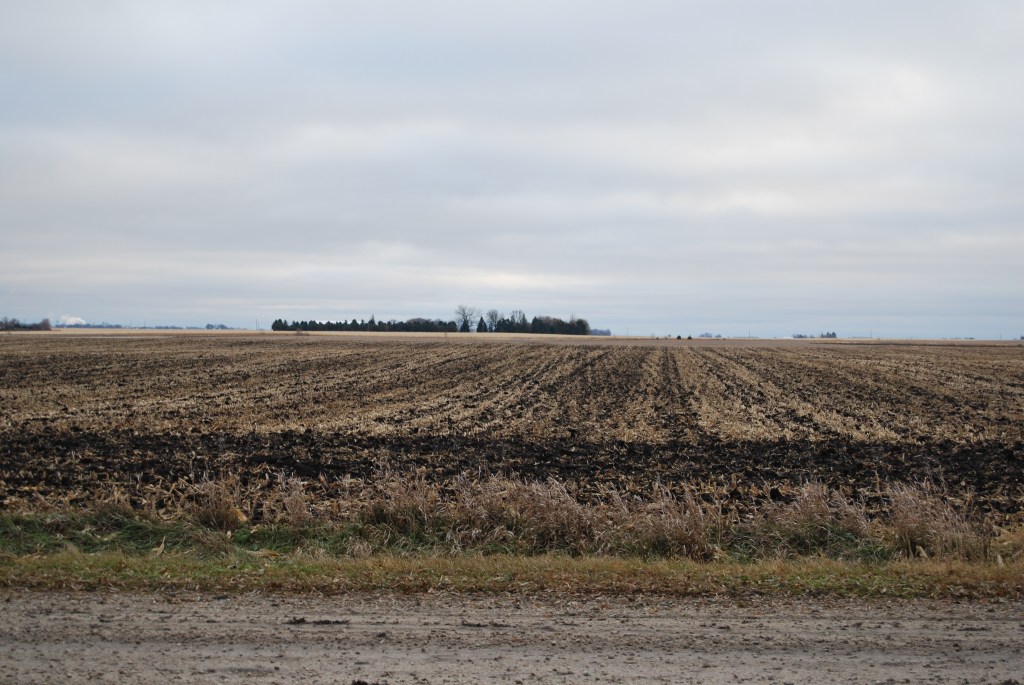
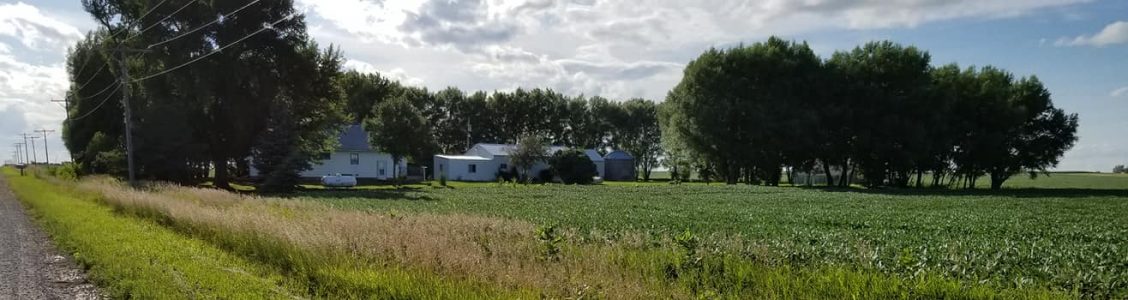
Along the two mile stretch of our gravel road from the county highway on our east until the first cross road to our west, there are seven acreages. That leaves much room between neighbors, but not so much that you don’t know each other. The first neighbor to give us a welcome and introduce himself and his young son gave us some sage country advice, “Out here we are friendly, but we like to be left alone.” Last year we were visited by another one who has an art degree, works at a local co-op, and helps run a custom jewelry business with his wife. Yet another works as a physical education teacher, and the other two are a cattle rancher and the crop farmer who owns almost all the land around the rest of us. On the property closest to us to the east the house is gone. The out buildings survive and the family keeps it up, mows, and the yard light still burns at night, but no one lives there. What used to be the eighth acreage was sold a few years ago, all the outbuildings removed, and now corn grows where the yard was. The only clue that anything but crops ever existed there is the short, weedy gravel driveway approach from the road, and the four digit house number sign leaning next to it on a post. There are two streams that wind through the area and cross under our road at either ends of our two miles. A cemetery with a couple hundred graves sits on a hill overlooking our road and one of the streams. The oldest burial I have found dates from 1881. Usually the vehicles on the road belong to local folks going to and returning from jobs, giving a wave if they see you in the yard. The traffic will soon increase to a steady stream of farm equipment, bringing in the fall harvest.